The Laboratory · From the benchKharagpur — 1 January 1964
My introduction to the chemistry of bliss
In 1964, at IIT Kharagpur, a research fellow overdosed on bhang at a Holi celebration. His research guide, Dr Achintya Kamal Sen, instead of rebuking him for his absence from the laboratory the next day, introduced him thoroughly to the newly isolated active component of the leaf that causes hallucinations. A lesson that lingered and culminated in a meeting with the inventor of anandamide, the body's own molecule that causes bliss, three decades later.
The reading couldn’t load. Download it instead.
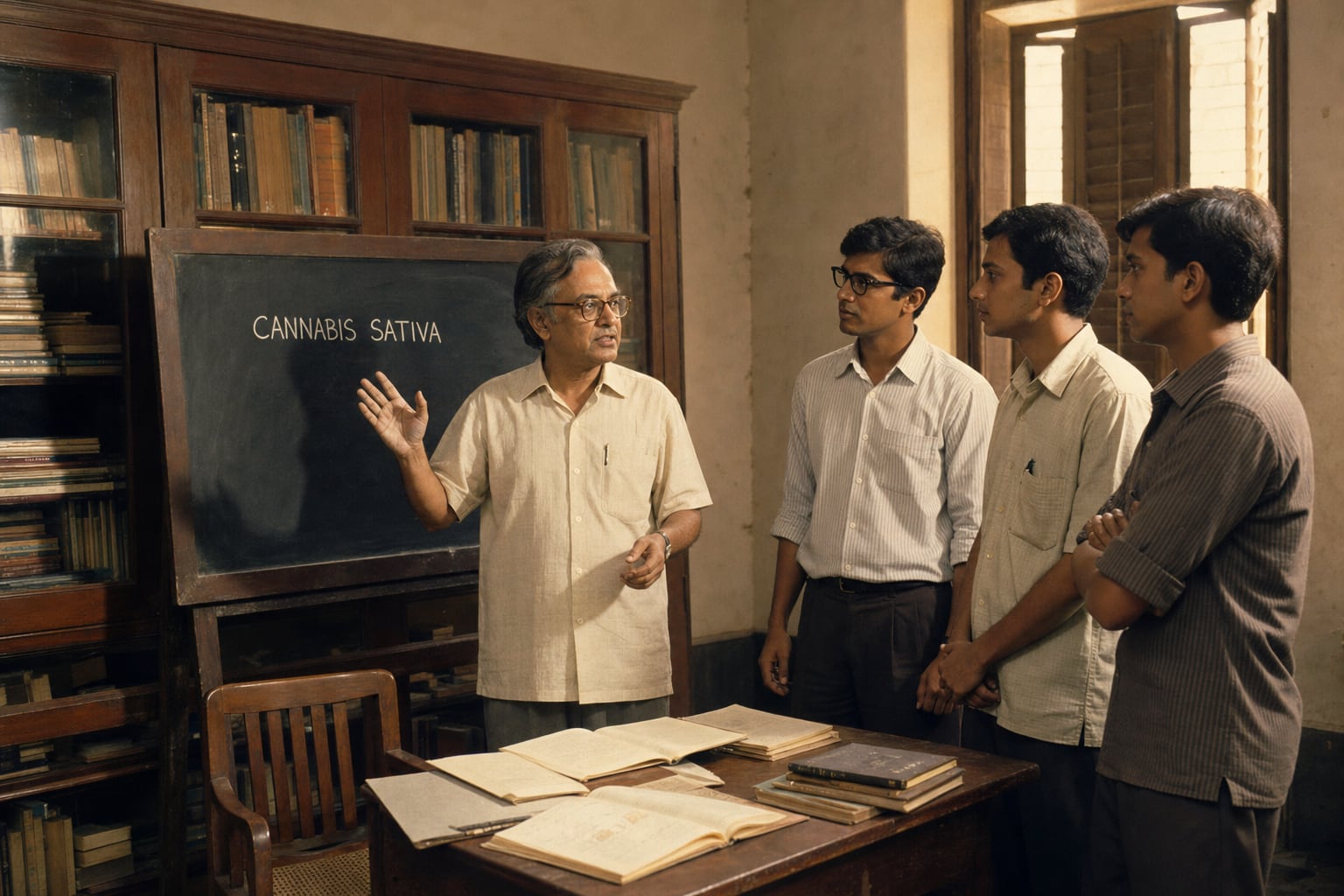
The year 1964 stands out as a defining chapter in my life. After completing my Post-Graduate Diploma in Synthetic Drugs at IIT Kharagpur, I earned a research fellowship from the Indian Council of Medical Research to pursue my doctoral studies at the same institute. I considered myself very lucky to be working on my doctoral thesis under the guidance of Dr Achintya Kamal Sen, an Assistant Professor in the Department.
Dr Sen was an exceptional teacher and a scholar of uncommon depth in experimental chemistry. He was a strict disciplinarian; once he commenced roll call, he would not allow any student to enter the classroom. At the same time, he was extremely friendly when explaining chemistry to students with the lowest IQs.
Dr Sen conducted his postdoctoral research in Professor John C. Sheehan’s laboratory at the Massachusetts Institute of Technology. While Alexander Fleming had serendipitously discovered penicillin in 1928, its total synthesis eluded chemists for nearly three decades. The impasse ended in 1957, when Sheehan’s group achieved the first complete chemical synthesis of penicillin V.
This achievement revolutionised medicinal chemistry and enabled chemists to tailor similar molecules to enhance stability, broaden spectra, and reduce toxicity. Although Dr Sen was not directly involved in that research, he carried that legacy — and its spirit of methodological rigour and creative boldness — back to Kharagpur.
The focus of my thesis was on the synthesis of psychopharmacological agents. Before the 1950s, only sedatives and hypnotics were available to quell anxiety or insomnia. The decade of the 1950s changed everything. Chlorpromazine, and soon after reserpine, transformed psychiatry by showing that a drug could calm psychosis without putting the patient to sleep. This breakthrough inaugurated the modern era of tranquillisers, or neuroleptics. Almost simultaneously, researchers began to map the brain’s chemical language, identifying and confirming the roles of key neurotransmitters.
Among the milestones were the discovery of serotonin, the recognition of GABA as a primary inhibitory signal, the central role of dopamine, and the importance of the adrenergic transmitters. Under strange circumstances, it was found that the tuberculosis drug iproniazid is a powerful antidepressant. Meanwhile, adrenaline was firmly established as both a neurotransmitter and a hormone, linking the body’s stress response with brain chemistry. All this had happened within a decade. Assimilating all these developments, and charting my journey to synthesise a new molecule, were challenging tasks for me.
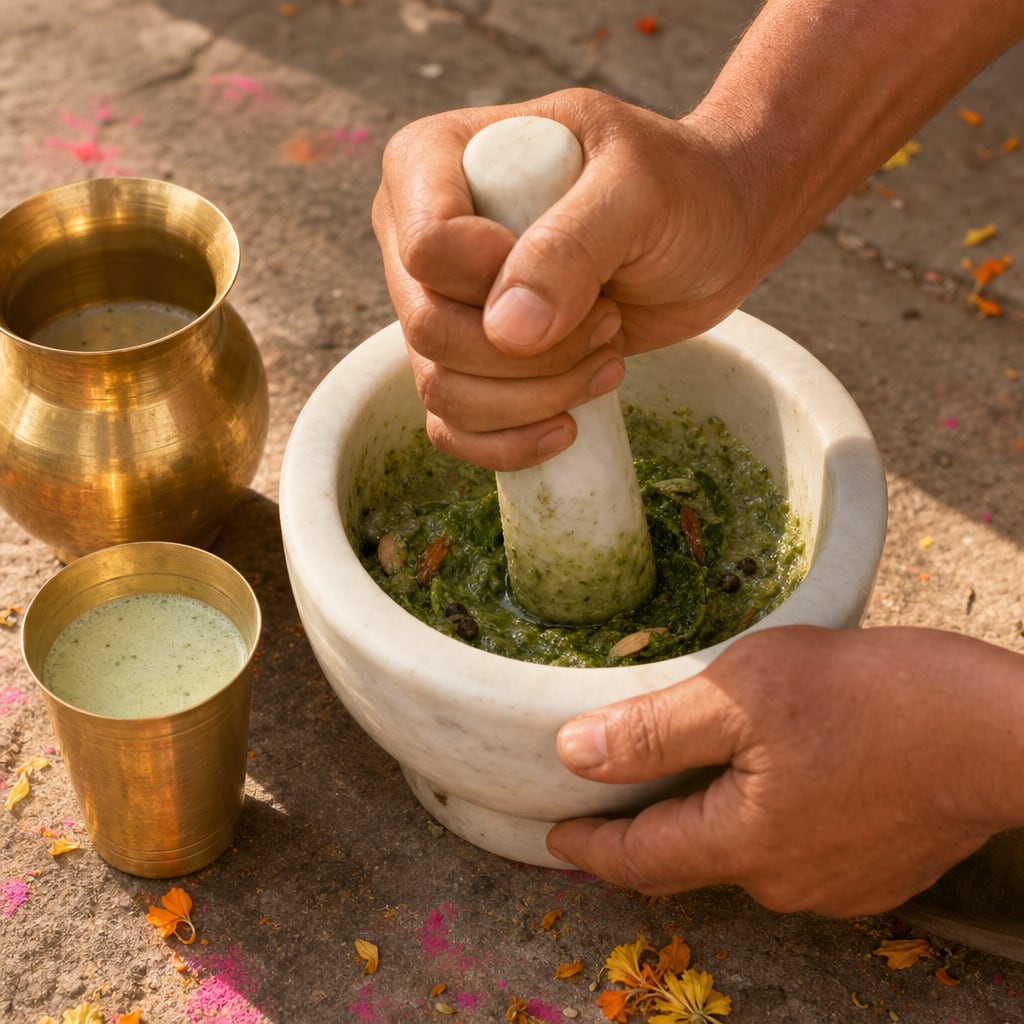
Ram Kumar, one of my colleagues, was a senior lecturer in Rajasthan and had come to IIT on study leave to pursue his PhD. He used to reside with his family in a rented house off campus, with special permission from the authorities. He invited me to have dinner at his home during Holi. I was unaware that drinking bhang and singing traditional songs are rituals in Ram Kumar’s community. Without knowing the outcome, I had a lot of the tasty syrup of bhang and started hallucinating. Euphoria and uncontrollable laughter at the silliest joke soon followed. After dinner, he drove me to my hostel, and I slept through the next day.
When I returned to the laboratory the following day, Dr Sen looked at me and asked,
“What happened to you yesterday?”
“Sir, I wasn’t feeling well,” I replied hesitantly.
He smiled knowingly. “Ram Kumar told me you had bhang at home and needed rest. I thought both of you would invite me. I’m disappointed.”
In that moment, I realised I hadn’t committed any sin — this wasn’t like missing work because of a hangover from alcohol. I should have admitted the truth and made a light-hearted confession.
Dr Sen wrote Cannabis sativa on the board and said, “You may not know that the leaves and flowers of this plant constitute bhang. The active ingredient which causes its hallucinations is Δ⁹-tetrahydrocannabinol, or THC.”
He wrote the structure of the compound and said, “Recently, the Israeli chemist Raphael Mechoulam has extracted this compound from Lebanese hashish, established its structure, and conclusively identified it as the active ingredient of cannabis.”
“There is also another interesting development,” he went on. “After Mechoulam isolated and elucidated the structure of THC, it was revealed that it is not soluble in water, but is soluble in lipids. It became evident why, historically, during festivals in India like Holi and Shivratri, cannabis leaves are pasted with milk, ghee, dry fruits, sugar, and the like, to prepare bhang. The active ingredient THC primarily exists in acidic form in the dry cannabis leaf and flower, and is not psychoactive enough to cause hallucinations. During the preparation of bhang, THC is formed and dissolved in the milk and lipids. The preparation of bhang is therefore a culinary art and science.
“Isn’t it interesting that in India, for centuries, people have used cannabis for healing, recreation, or rituals by extracting THC with the lipids of dairy products and dry fruits?” Dr Sen exclaimed.
After listening to that fascinating story, I was still lost in thought when Dr Sen suddenly turned to me. With his characteristic firmness, he said, “In fifteen days, I want you to make a presentation on THC before the faculty and research fellows.” For a moment, it felt as though the heavens had fallen upon me. The task was daunting, yet inescapable.
When the day of the colloquium arrived, the hall buzzed with curiosity. Dr Sen explained, “Cannabis is the botanical name of the plant Cannabis sativa and related species, cultivated for millennia for fibre, seed, medicine, and its psychoactive properties. Marijuana refers to the dried flowers and leaves of the cannabis plant, usually smoked or consumed for their psychoactive effects, primarily due to THC. Hashish, on the other hand, is a more concentrated preparation made from the resinous trichomes of the plant, pressed into cakes or balls, and is generally more potent than marijuana. Though all three come from the same plant, the form and concentration of active compounds determine their strength, cultural uses, and effects.”
He continued, “Cannabis is different from stimulants like cocaine. When consumed as leaves heated with milk, or as bhang or charas, cannabis exerts milder, slower-onset effects, producing relaxation, altered perception, laughter, and sometimes hallucinations, primarily through THC acting on the brain’s cannabinoid receptors. In essence, while cocaine and amphetamine-type stimulants (ATS) are used as functional stimulants for endurance, cannabis leaves are used more as a psychotropic relaxant and a cultural or ritual aid.”
After that introduction, Dr Sen asked me to speak on the chemistry of cannabis. On that occasion, he made a remark that stayed with me forever:
“I am confident that just as Sheehan’s synthesis of penicillin opened the door to a new generation of antibiotics, Mechoulam’s synthesis of THC will herald the evolution of several new psychotropic molecules.”
I am confident that just as Sheehan’s synthesis of penicillin opened the door to a new generation of antibiotics, Mechoulam’s synthesis of THC will herald the evolution of several new psychotropic molecules.
The discussions that followed were lively and stimulating.
With the THC ‘template’ in hand, chemists synthesised hundreds of analogues over the next two decades. Some were very close to the natural, classical cannabinoids, while others had simplified or rearranged skeletons. Dr Sen’s 1964 prediction proved correct.
The body’s own cannabis
I had to give up research on psychopharmacological molecules in 1968, as my job required me to do other studies. However, my passion for psychoactive compounds continued.
In 1992, the Israeli scientist Raphael Mechoulam and his associates — William Devane, an American neuroscientist working as a postdoctoral fellow, and Lumír Ondřej Hanuš, a Czech analytical chemist, both of whom collaborated with Mechoulam in Jerusalem — proved that the human body produces chemicals similar in structure and function to the active compound in cannabis, THC. They named the first natural chemical made by our body, and isolated by them, ‘anandamide’.
This groundbreaking discovery of anandamide — the first identified endogenous cannabinoid neurotransmitter, named from the Sanskrit ‘ananda’, meaning ‘bliss’ — opened the field of endocannabinoid research, revolutionising neuroscience by revealing a previously unknown regulatory system in the human body. The word ‘endo’ means inside the body, and ‘cannabinoid’ comes from cannabis. So, they are our body’s own ‘cannabis-like’ molecules.
When anandamide was discovered in 1992, the scientific community greeted it with excitement and surprise. Until then, neurotransmitters like serotonin, dopamine, and GABA had dominated the landscape of brain chemistry. The idea that the brain might also produce its own cannabis-like molecules was almost unthinkable.
Thus the isolation of anandamide, and the concept of the ‘endocannabinoid system’, marked a turning point in brain chemistry. Researchers realised that cannabis was not merely an external intoxicant but a window into a hidden physiological system that regulates mood, appetite, memory, and pain. While the discovery of anandamide reshaped neuroscience, opening new debates in medicine and society about the therapeutic potential of cannabis, it indirectly affirmed the ancient therapeutic uses recognised by Ayurveda.
In 1995, I was in Beijing and learned that the hotel where I was staying was hosting a conference titled ‘New Horizons in Brain Chemistry and Human Well-Being’. As I expected, Raphael Mechoulam was one of the keynote speakers. I spoke to the organisers about my interest in the subject and managed to meet the ‘father of cannabis research’. He said,
“Working on hashish, when I learned that in India, the use of cannabis is linked to religious festivals and folk medicine, I thought it differed greatly from the use of hashish for intoxication. In the 1970s, the budding biotechnologist, Ananda Chakrabarty, was at the Hebrew University to talk about his pathbreaking discovery of ‘oil-eating bacteria’. He is also a Sanskrit scholar, and he shared some of his profound knowledge of Indian scriptures and the Ayurvedic usage of cannabis.
“I was so impressed that the name, ‘Ananda’, became ingrained in my mind. Years later, when we isolated cannabinoids from the human system and made a huge difference, I thought it would best complement the molecules nature produces in our body to furnish bliss. So Chakrabarty inspired me to coin the unique name ‘anandamide’ for the unique molecule: endocannabinoid,” Professor Raphael Mechoulam stated.
I often consider myself fortunate that, on that eventful day at Kharagpur, instead of rebuking me for carelessly getting intoxicated and staying absent from the laboratory, Dr Achintya Kamal Sen, with his characteristic generosity, introduced me to the chemistry of the leaf that brings bliss, and in doing so opened a door to a world where science meets wonder. That chance changed my curiosity into a lifelong interest that eventually led me to meet the scientist whose pioneering work reshaped our understanding of the brain’s hidden signalling system. I wished to bow again at Dr Sen’s feet and share my conversation with the ‘father of cannabis research’. But that privilege is no longer mine — he has already departed for his heavenly abode, leaving behind a legacy of wisdom and kindness that still lights my path.
The discussion
A conversation about this memoir
Two readers talk this memoir over — a conversation about it, in Bengali. Not the memoir itself.