The Laboratory · The man who built the breakthrough reactorKharagpur — 1 January 1966
The forgotten achievement
At the Chemistry Laboratory at IIT Kharagpur, a young researcher displayed extraordinary courage and ingenuity by designing and fabricating his own high-pressure equipment and then risking his life to conduct its first trial. He mastered a difficult frontier of experimental chemistry, yet circumstances took him away from the laboratory. The experiment survived in my memory, but the researcher who dared to perform it was largely forgotten.
The reading couldn’t load. Download it instead.
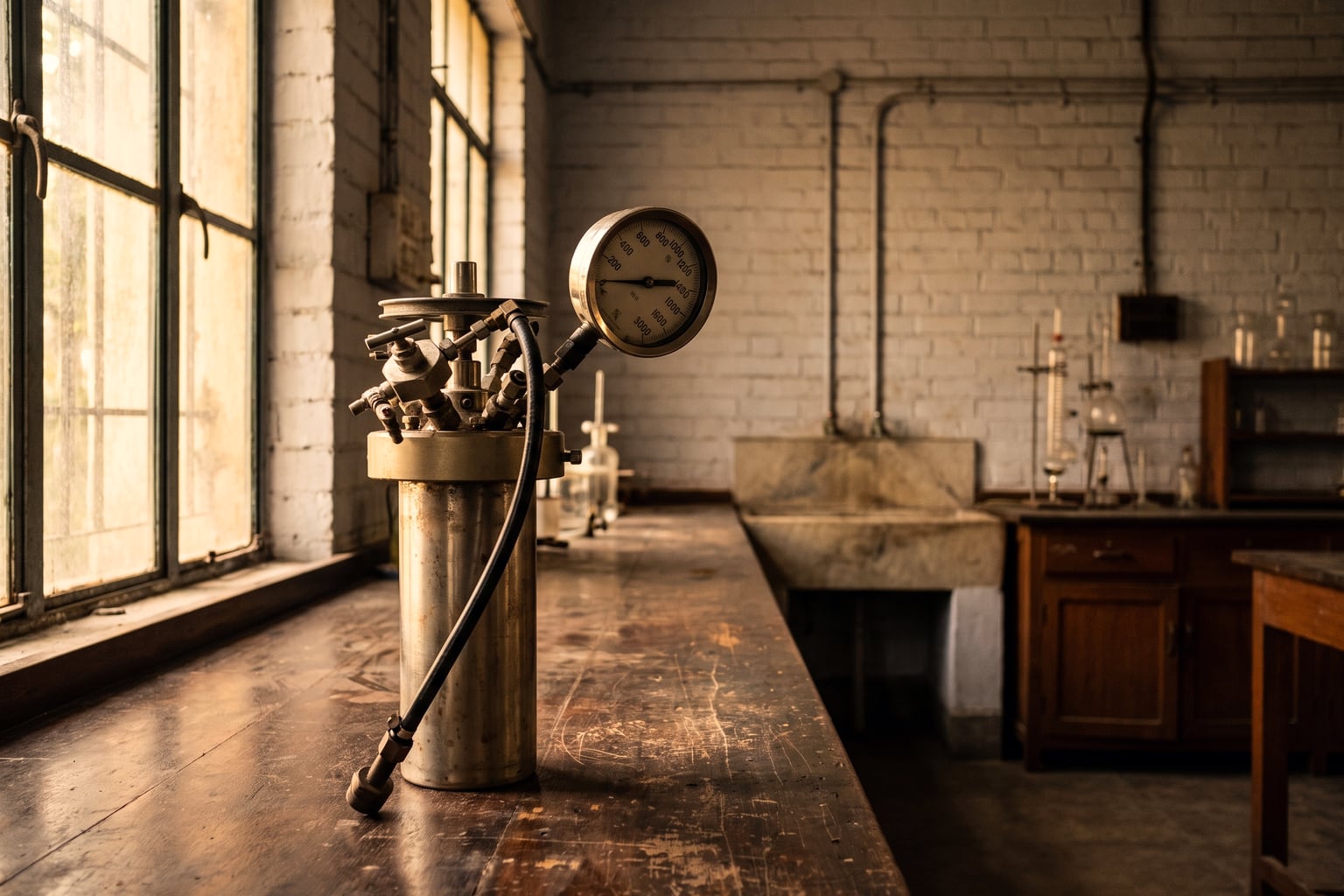
In the 1960s, at IIT Kharagpur, as Research Scholars in the Chemistry Department, we used to work until 9 or 10 pm every day, even on weekends. With graduate students and faculty members away from the Department, those hours were most productive for us. At the same time, we often had a lot of fun.
We also enjoyed the freedom to share chemicals, apparatus, and ideas. These were forbidden during institute hours when the Professors and our research guides were around. In those days, the Professors used to work with shoestring budgets. Given their long-term goals, they were therefore quite restrictive about transferring expensive chemicals from one laboratory to another.
I used to work on the first floor of the chemistry department; there were organic chemistry and polymer chemistry laboratories and a classroom, while the ground floor housed the physical chemistry and high-pressure technology laboratories. Sir J C Ghosh, the founder Director of our Institute, had a vision for industrial chemistry. He was instrumental in establishing the unique ‘High Pressure Technology’ laboratory, a ‘Fischer Tropsch Pilot Plant’ in the open air, and a Rubber Technology Laboratory in the Institute’s formative years.
Professor Ghosh’s drive toward industrial catalytic gas reactions and his exposure to major industrial chemistry abroad led to the establishment of the highly acclaimed high-pressure technology laboratory under the guidance of Professor S K Bhattacharyya, Head of the Department.
A postgraduate in chemistry at Ravenshaw College, Cuttack, C K Das joined the high-pressure technology laboratory as a Research Scholar in 1966. Carrying out chemical reactions under high pressure involved risks. His predecessor in the laboratory, G B Purohit, having left for postdoctoral studies, CK always remained tense. Besides, he was humble and remarkably shy despite working in one of the frontline laboratories at our time.
Ants on the floor
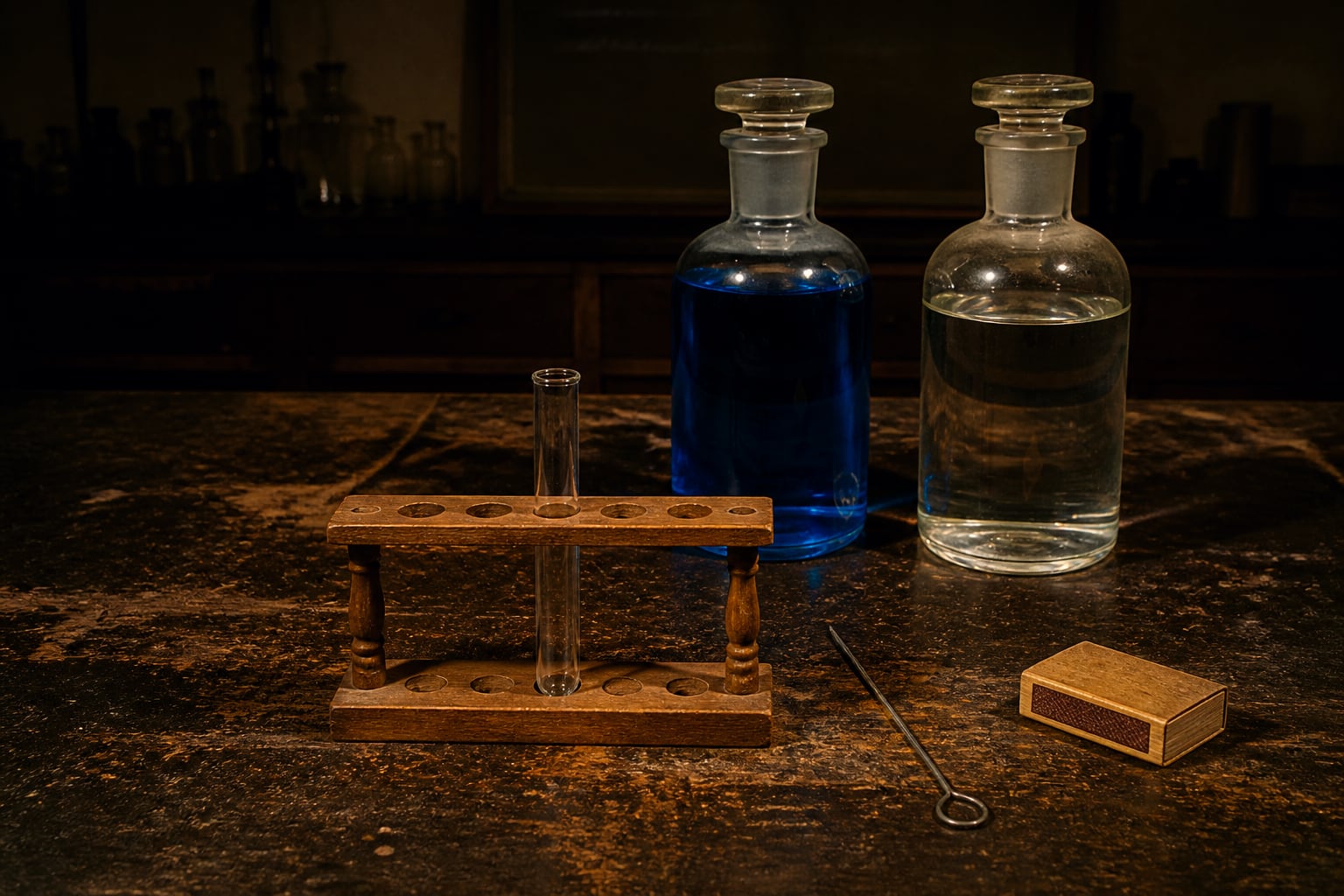
Once, late in the evening, CK came to me looking for Fehling’s solution used as an indicator for testing sugar and similar organic molecules. My senior, Sashibhusan Rath from Odisha, was with me. As alums of the same college in Cuttack, we shared a common bond, and seniority was often forgotten. Sashibhusan became curious and asked, “Why do you need this reagent in high-pressure research?”
“I have carried out a catalytic reaction under high pressure in the reactor to produce sugar from carbon dioxide and hydrogen,” CK explained with humility.
Sashibhusan said, “If you succeed, you will get a Nobel. And to test for sugar, you don’t need any reagent. You open the reactor and leave it on the floor. When you come tomorrow morning, if there are ants around, you can be sure you will go to Stockholm to receive the Prize.”
When you come tomorrow morning, if there are ants around, you can be sure you will go to Stockholm.
Undeterred, CK smiled and was about to leave. I called him back and handed him the reagent. As expected, he did not succeed.
Sashibhusan was always cheerful and humorous. He submitted his thesis in polymer chemistry, and within a few days, joined a reputed synthetic rubber manufacturing company. Later, on his own initiative, CK conducted a remarkable study on how hydrostatic pressure changes the rate of the acid-catalysed hydration of acrylic acid and used it to infer the mechanism. He earned a publication in the highly regarded Journal of the American Chemical Society in 1969.
Years later, patents were filed for making sugars by first converting carbon dioxide into smaller aldehydes under high pressure and then building sugar molecules.
Then, looking back, I thought that with sustained effort and maturity, CK might have cracked the synthesis and found ants around the reactor on the floor.
The Sunday trial
The reactor CK used, however, was designed and fabricated by G B Purohit, a brilliant chemical engineer working as a Research Fellow in our Department. Fondly, I used to call him Panditji. His project was to work at a higher pressure than global benchmarks at that time and construct the reactor for his work. There was considerable risk. So, after he designed and had his reactor fabricated, his research supervisor asked him to undertake the trial on a Sunday to minimise injuries and hazards to people around in case of any unexpected disaster.
Purohit undertook the reactor testing on a Sunday. He asked me to accompany him to the laboratory so I could help in case of an accident. He succeeded, and during the trial, the reactor withstood a pressure of more than 2,500 times atmospheric pressure, while his target was around 2,000 atmospheres.
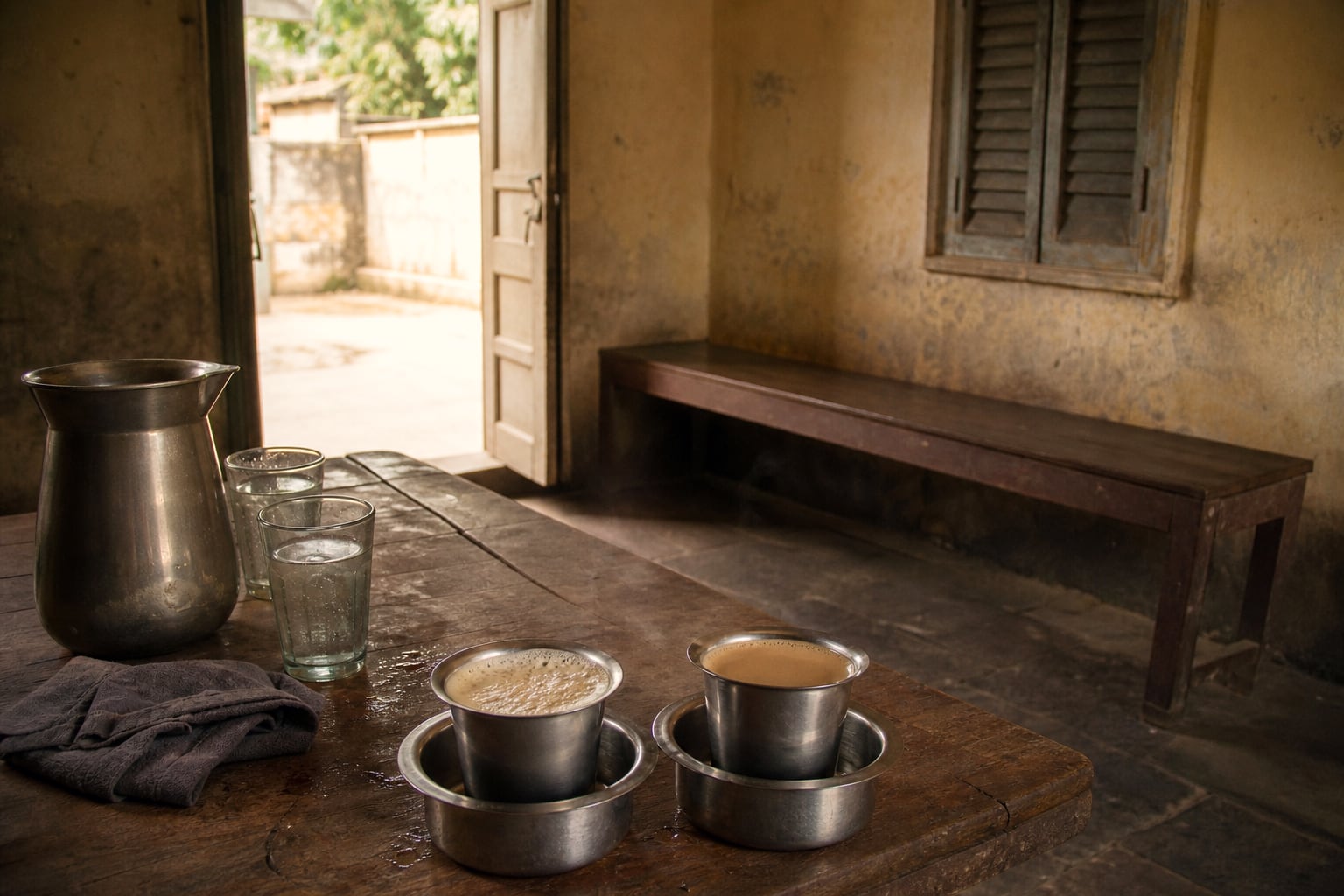
After that, we rushed to Nair’s canteen outside our campus to have filter coffee in the Malayali style. At that time, restaurants were forbidden on the IIT campus except for the Institute’s canteen on its premises. Nair converted one of the rooms in his house, without electricity, in the adjoining Salua forest to serve filter coffee and snacks. That day being a Sunday, it was therefore our only option for celebration.
Even the teacher supervising the work, Dr N D Ganguly, whom we fondly called ‘Kanuda’, did not come to the Department and missed the coffee.
Purohit submitted his doctoral thesis in 1966, and while he was writing his paper for publication, the foreign examiner of the thesis, Professor Edward Whalley, internationally reputed for his work in high-pressure chemistry at the National Research Council in Ottawa, Canada, wrote a letter to Professor S K Bhattacharyya, Purohit’s research guide and our Head of the Department. Professor Whalley commended Purohit’s work. He, however, wrote that since the same work done in his laboratory was awaiting publication, Purohit’s work could not be published. Appreciating Purohit’s skills, Professor Whalley offered an international postdoctoral fellowship and invited Purohit to work with him.
I cannot forget that eventful Sunday — the long hours of suspense as Purohit risked his life to conduct the first trial of a high-pressure apparatus that he had designed and built almost entirely by himself. We waited anxiously, knowing that at those pressures even a small failure could have disastrous consequences. For Purohit, however, it was not merely an experiment; it was the culmination of ingenuity, patience and courage.
A parallel, and a contrast
Before leaving for Canada, Purohit had spoken to me about Walter Julius Reppe, the remarkable industrial chemist at erstwhile I.G. Farbenindustrie, later BASF, in Germany. In the 1930s, Reppe pioneered equipment and techniques that made it possible to handle acetylene under high pressure despite its notorious tendency to decompose explosively. From that mastery emerged an extraordinary range of reactions and industrial processes known collectively as “Reppe chemistry”. His work helped show how mastering extreme reaction conditions could open entirely new territories in industrial chemistry.
In 1960, Reppe, Karl Ziegler and Otto Bayer were jointly awarded the prestigious Werner von Siemens Ring, bringing together three giants of German industrial chemistry. Three years later, Ziegler shared the Nobel Prize in Chemistry with Giulio Natta for their discoveries in polymer chemistry. Reppe, whose contributions ranged across acetylene chemistry, catalysis and high-pressure industrial processes never received the Nobel Prize.
Recently, I found that Reppe did not receive the Prize despite being nominated sixty-four times between 1949 and 1966, four of those nominations by Butenandt and von Euler-Chelpin proposing that he share the prize with Karl Ziegler himself. In 1955 alone, nine nominations were made for him for the Prize.
Some historians have said that one of the principal reasons Reppe did not receive the Prize is that he was a Direktor of I.G. Farben from April 1939 to 1945. His acetylene chemistry fed Buna synthetic rubber, a strategic war material. On the other side, he was not a defendant at the I.G. Farben trial at Nuremberg. He was interned and interrogated by American forces from 1945 to 1947 without charges. Nothing found links him personally to the Buna works at Auschwitz-Monowitz or to forced labour. The other explanation offered is simply the Committee’s long reluctance to honour industrial chemists. Be that as it may, over time, even the expression Reppe chemistry has receded from the vocabulary of many younger chemists.
CK’s assistance helped publish a paper covering part of Purohit’s thesis in the Journal of Physical Chemistry, with joint authorship by Professor S K Bhattacharyya in 1969, the year Reppe passed away. It is the only trace of G B Purohit’s brilliance in high-pressure chemistry anywhere. In his 1967 Acharya J C Ghosh Memorial Lecture, Professor Bhattacharyya had, however, named “Dr G. B. Purohit” among “a band of brilliant research workers”.
Looking back, I see something of Reppe’s spirit in Purohit — not, of course, in the scale of their achievements, but in their instinct as experimental chemists. Researchers using Reppe chemistry may not know his name. Similarly, researchers using Purohit’s equipment and technique may not know who made that courageous breakthrough. Purohit remained unrecognised in the highly rated paper published by CK, using the reactor courageously from IIT Kharagpur in the Journal of the American Chemical Society. Only a few of us, who were around, know about that injustice.
Purohit had taught himself how to design, fabricate and operate equipment for reactions under formidable pressures. He had acquired that rare combination of chemical understanding and engineering courage that cannot easily be learnt from textbooks. Had circumstances been different, he might have built a new generation of chemistry around that expertise and led a generation of young chemists in tackling difficult problems of industrial chemistry.
After submitting his doctoral thesis, CK left the reactor behind to work as a scientist at the Fuel Research Institute in Dhanbad. Other scholars carried forward the legacy of Purohit’s courageous invention, while he remained forgotten at IIT.
At the Planning Commission
Years later, in the 1970s, after I too had left research and was working for the chemical industry, I walked into a meeting at the Planning Commission of the Government of India and, to my astonishment, found Purohit there. My former fellow researcher had become an Adviser to the Ministry of Petroleum and Chemicals, Government of India, which managed petroleum, major chemicals, and fertiliser development and production units collectively. When I asked him about returning to research, he told me quietly that he had no desire to return to his alma mater at Kharagpur. Nor, he said, did he any longer have the time or energy to build another high-pressure laboratory from the ground up. Age, he felt, was already against him.
There was an irony in what followed. Purohit and I found ourselves contributing effectively in the discussion on the feasibility of indigenising technologies for producing heavy chemicals. The Secretary of the Ministry, coincidentally a postgraduate of the Indian Institute of Science, Bangalore, now Bengaluru, listened to our views with interest. So did the representatives of the chemical industry.
In fact, the meeting observed with some amazement as two former laboratory researchers, unexpectedly reunited after many years, began debating a familiar scientific challenge from very different positions. One was now in Government and the other in industry. Yet both were concerned with the same question: how could India reduce its dependence on imported technology to manufacture heavy chemicals? These were not merely industrial commodities. They were fundamental to the future of Indian agriculture and to the growth of the country’s downstream chemical industries.
For a moment, the years seemed to disappear. The crude high-pressure apparatus at Kharagpur, that anxious Sunday, Purohit’s fascination with Reppe and our youthful belief that difficult chemistry could be conquered by ingenuity — all seemed to return in another form. The laboratory had been left behind, but the purpose had not. The young researcher who once built his own high-pressure reactor was now trying, from a very different platform — the Government of India — to help build India’s technological self-reliance in the chemical industry.
The two papers from that laboratory, printed here at Dr Sarma’s instruction so that the only published trace of G B Purohit can be found from this page.
S. K. Bhattacharyya and G. B. Purohit, “Effect of pressure on the rate of acid-catalyzed hydration of crotonic acid”, The Journal of Physical Chemistry 1969, 73(10), 3278–3283.
S. K. Bhattacharyya and C. K. Das, “Pressure effect and mechanism in the acid-catalyzed hydration of acrylic acid”, Journal of the American Chemical Society 1969, 91(24), 6715–6720.