Portraits · Sunil who?Cuttack — 1 January 1956
The silent murder of the kendu leaf agitation
In January 1956, the students of Cuttack launched a spirited agitation demanding the inclusion of Seraikela and Kharsawan in the then State of Orissa. On one fateful day, the police dispersed the demonstrators with tear gas and opened fire. Sunil De was killed. He was no political activist, but merely an onlooker like us. The agitation eventually faded as political priorities changed. Yet Sunil De's death remains a poignant reminder of the price ordinary people sometimes pay in public movements, while political agendas shift like sands with time.
The reading couldn’t load. Download it instead.
In the early 1950s there were many demands from state governments, political parties, organisations and regional groups to redraw the boundaries of certain Indian states. The demands came in several forms. Some were for new linguistic states; others were for the transfer of particular districts or tracts from one state to another. To resolve the disputes, the Government of India constituted the States Reorganisation Commission in December 1953.
In Odisha there was a simmering demand for the inclusion of the Odia-speaking tracts that lay in Bihar, Andhra Pradesh and Madhya Pradesh. The most vociferous of these was the demand for the two princely states of Seraikela and Kharsawan, and there were two reasons for it.
First, shortly after Independence the Government of India considered Seraikela and Kharsawan to be enclaves within Singhbhum and decided to transfer them to Bihar. Otherwise these two areas, which were predominantly Odia-speaking, were part of Odisha. They were princely states rather than part of British India proper: both merged with Odisha on 1 January 1948, and were transferred to Bihar four months later, in May.
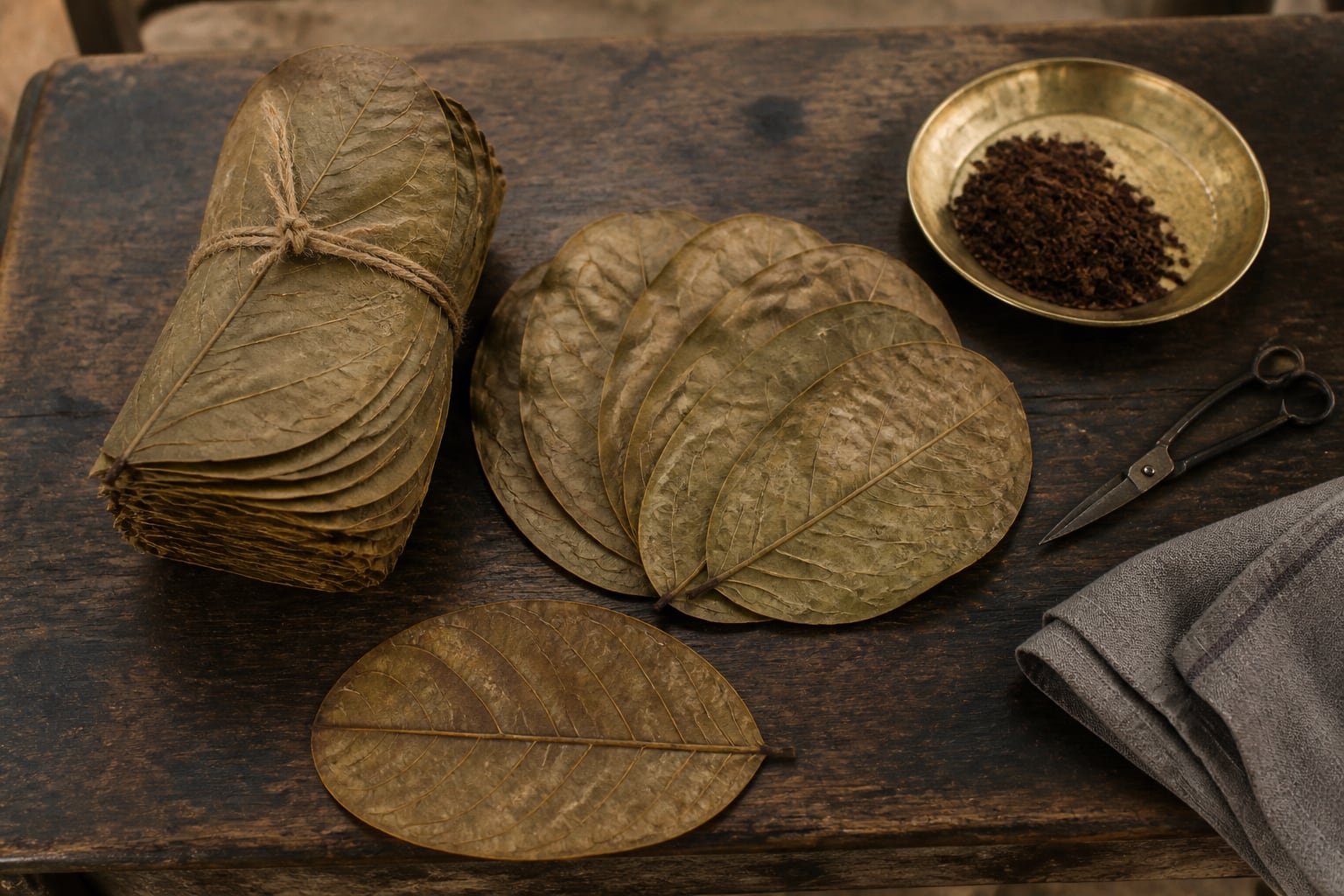
The second reason centred on the kendu leaf — kendu patara — that grew there, and on the rich mineral resources. Later, in college, I learned that the botanical name of the kendu or tendu tree is Diospyros melanoxylon (R), and that its leaves are traditionally used for wrapping tobacco to make bidis, which the people who cannot afford cigarettes smoke.
There is, however, a subtle difference between a bidi and a cigar. A bidi is tobacco wrapped in a kendu leaf, while a traditional cigar is made entirely from specially cultivated and cured tobacco leaves: tobacco filler inside, a tobacco binder around it, and a fine tobacco leaf as the outer wrapper.
So the leaf economy and the access to minerals both carried significant revenue implications for Seraikela and Kharsawan, and both would have accrued to Odisha. The fact was that Odisha was being denied what was due to it on geo-economic grounds. The State Government’s claim was therefore not merely sentimental or linguistic; it had a strong economic edge, and that is what turned it into a popular fury. There was anger, there was agitation, and there was a widespread belief that Odisha had suffered an injustice.
Unfortunately, none of Odisha’s demands was accepted in the Report of the Commission, which was tabled in the Lok Sabha in December 1955. After that there was a great deal of emotional agitation throughout the State on the demand for the inclusion of Seraikela and Kharsawan in particular. Student leaders became the drivers of the political agitation in different parts of Odisha.
The agitation spread to schools also
Cuttack town, being home to the largest number of schools and colleges in Odisha, became the epicentre of the student movement. I was a school student in Cuttack at the time, and although many of us did not understand the objective of the agitation, we did participate in it occasionally.
At that time the All India Radio station at Cuttack was housed at Madhupur House on Mission Road. The station was considered far more than another building: it was, as it were, the seat of the principal authority of the Government of India in Cuttack. Our school, Mission School, being in the vicinity of Madhupur House, was more often than others drawn into the slogan-shouting.
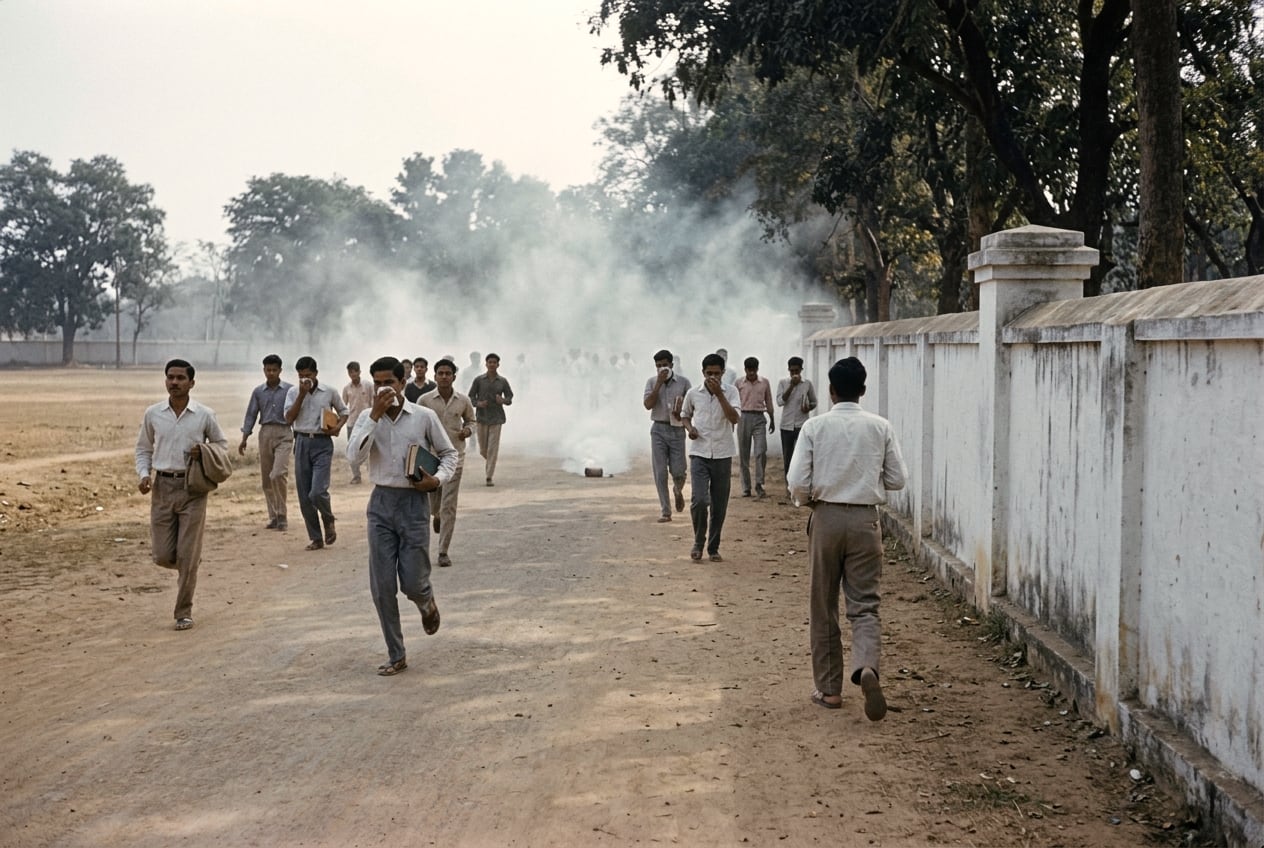
On one of those days in January 1956, when the agitation was gaining momentum, the police all of a sudden made a lathi charge and then used tear gas shells. Some people ran and left the place out of fear. Fortunately, I was not part of the agitation; but as we heard the sound and the commotion, we watched the situation from a safe distance. Some of the protesters did not disperse, and threw stones at the police. In retaliation the policemen fired, and one young man, Sunil De, was hit by a bullet and died on the spot.
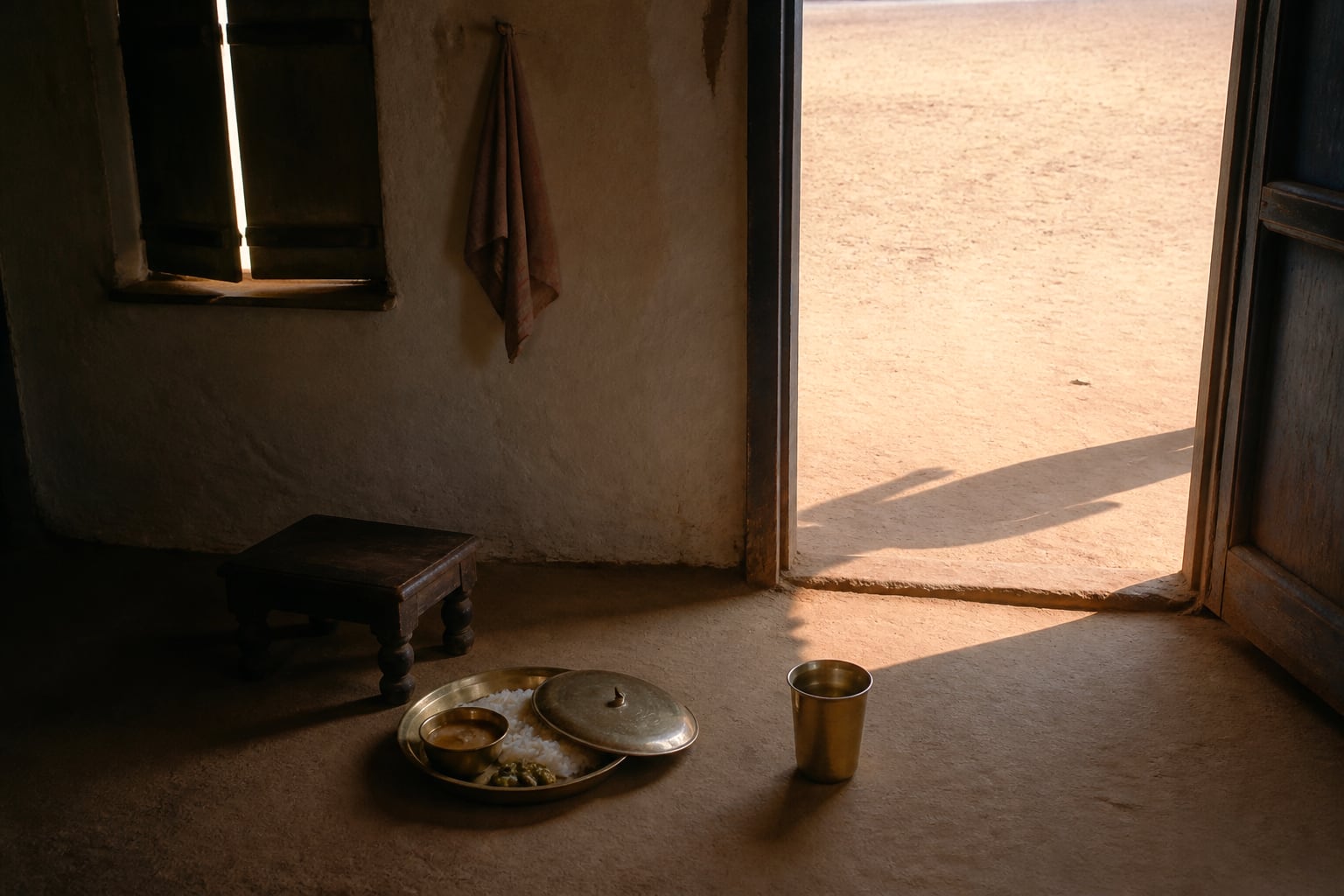
It transpired that young Sunil De, who lost his life, was not involved in the agitation at all. He was only a curious young man who had stepped out of his home, his mother waiting inside with his noon meal. He came out to see what the smoke was about, and never returned.
The shock of that moment deepened the emotion that had already gripped Cuttack. What people felt that day was not only anger but a kind of stunned sorrow, because Sunil De was an innocent onlooker.
What might otherwise have remained a political dispute became, in public feeling, something far more personal and tragic. That is what made the incident travel so quickly from mouth to mouth: not that a leader had fallen in confrontation, but that an ordinary spectator had been struck down. People spoke of it with hurt and indignation, as though any passer-by, any son of the city, might suddenly become its victim.
The feeling in Cuttack was therefore not merely political; it was personal, grieving and accusatory. Sunil De’s death gave the agitation a martyr, and from that point the sense of hurt and indignation seemed only to intensify. The slogan now rang out:
Sunil De’s atma kare phukar, Nehru Sarkar hoshiyar!
Its sense was clear. The soul of Sunil De was sounding a cry of warning, telling Nehru’s Government to beware.
Evaporated like camphor
After Sunil De’s death the memory of his martyrdom stayed alive for a few months. A couple of years later, when I was in college, I understood more clearly that while the agitation over Seraikela and Kharsawan centred on the kendu patara, the area was also a copper- and mineral-bearing belt with significant industrial potential.
In that short time, however, political ideologies shifted in Odisha, and when the party alignments were rearranged the agitation lost its force. The anger, the agitation and the widespread belief that Odisha had suffered an injustice all evaporated like camphor. Sadly, the State’s geo-economic grievances were buried in posterity.
Sunil De’s soul, too, seemed to recede into silence — without even a martyr’s memorial to preserve his name. He was, after all, not a political activist but an ordinary young man caught in an extraordinary moment. He did not get the time to know why he had lost his life.
Being witness to Sunil De’s unexpected death, a few of my classmates from Cuttack and I shall, however, remember him, without ever having known who he was.
The discussion
Conversations about this memoir
Two readers talk this memoir over — a conversation about it, in Odia & Bengali. Not the memoir itself.
ସୁନୀଲ ଦେ ର ଆତ୍ମା କରେ ଫୁଙ୍କାର, ନେହେରୁ ସରକାର ହୋସିଆର!Sunil De's soul cries out its warning — Nehru's Government, beware!