PortraitsCuttack — 20 November 2005
Bhogirath, the dahibara maker
Raghu Dahibara's death carries a chemist back fifty years to the Cuttack school gate — and to a blind octogenarian who can still explain, in his own way, why the taste will not come back.
The reading couldn’t load. Download it instead.
“Raghu Dahibara dies at 94” is recent news from Cuttack. Many street foods fade with time, but Raghu Dahibara has sustained its popularity, becoming a cultural landmark of Cuttack. For locals and visitors alike, eating there is not just about food, but about tradition, nostalgia, and identity. Many say a trip to Cuttack is incomplete without tasting Dahibara at Raghu’s shop.
The news of Raghu’s passing instantly carried me back to my schooldays, when another humble vendor had defined the taste of dahibara for us.
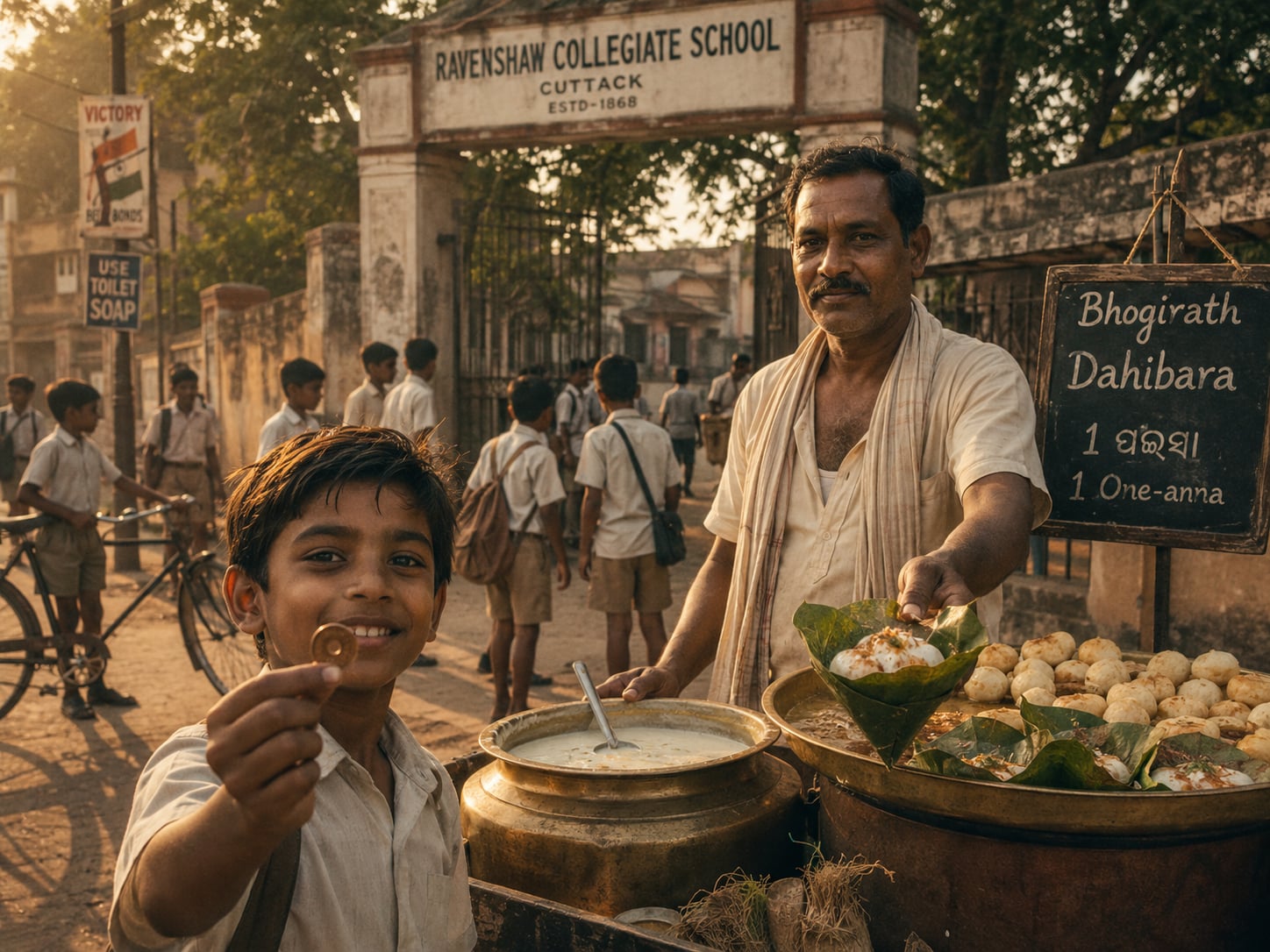
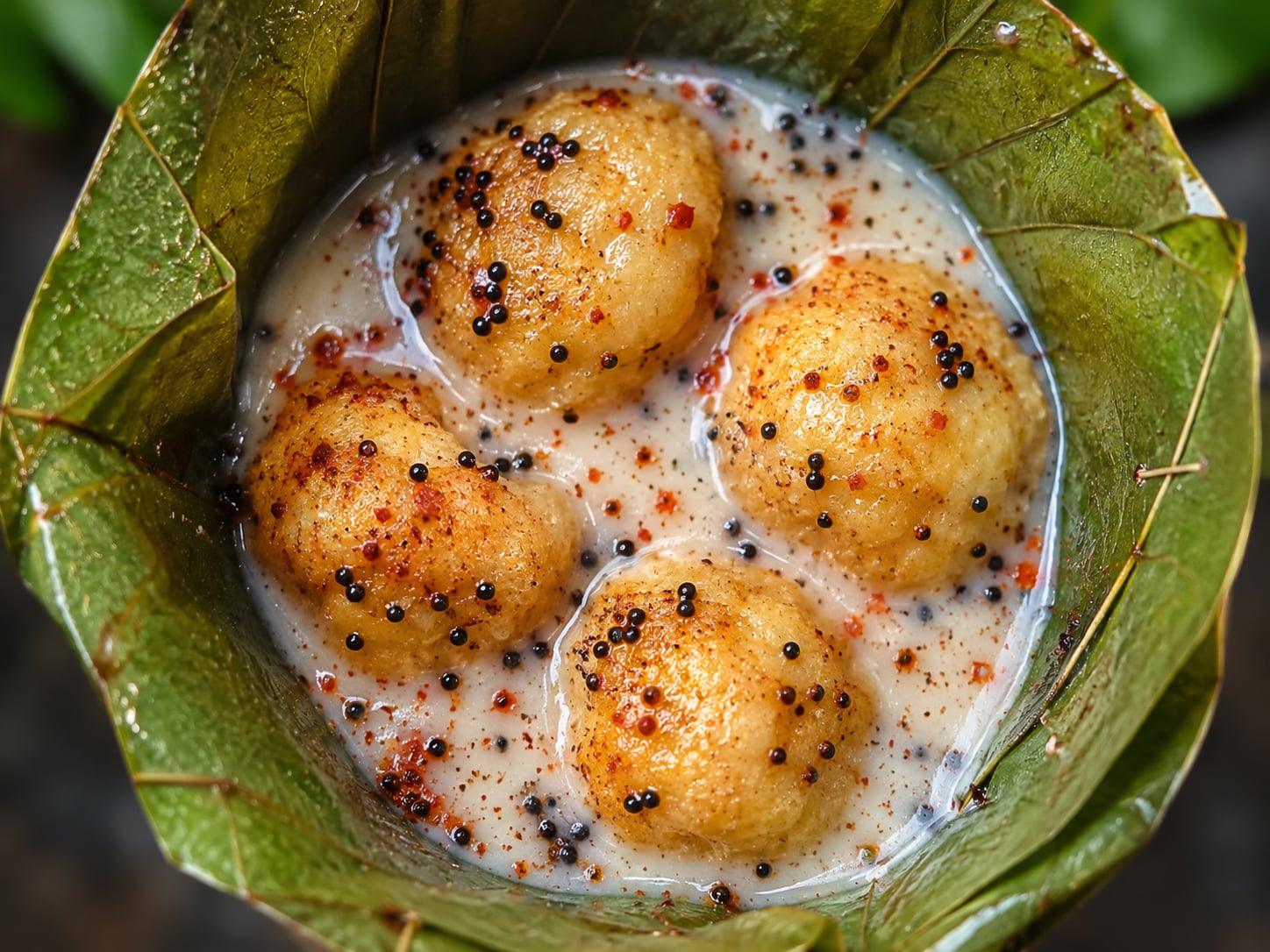
In the 1950s, when I was in school in Cuttack, Bhogirath, fondly called ‘Bhogi’ by young and old, used to sell Dahibara in front of our school gate. Till I left the school in the mid-fifties, four pieces of the delicious item, served in shining green Sal leaves folded in a conical shape, used to cost one anna. Sixteen annas made one rupee. In other words, each piece of dahibara cost one copper coin with a hole.
After we finished eating, he would pour dahi — a small bowl of tangy butter milk — into the cone for us to drink. A few burnt mustard seeds and specks of red chilli would float on the butter milk. And we were not required to pay for the extra dahi.
In those days, one anna was reasonable pocket money for grown-up school-going kids like me. My college was on a different route. Besides, Bhogi’s sales were confined to the forenoon until the school’s tiffin time, and he used to bring limited supplies. So, having left school, I lost touch with Bhogi and became an occasional customer of Raghu, whose Dahibara was becoming a popular brand in Cuttack.
After fifty years of leaving school, when we were celebrating our golden jubilee, I learned that Raghu Dahibara has achieved near-legendary status. There are long waits during the afternoon, and people swear by the unique tang and balance of flavours. I was delighted to learn that Bhogi is also alive as an octogenarian. He still sells his Dahibara standing on the side of the street without a formal shop as before. He has, however, shifted from in front of our school gate to the opposite side.
‘You can also find him beyond school hours,’ one of my ‘katkee’ classmates said. So I preferred to visit Bhogi the following morning.
Across the street from our school gate, I noticed two giant umbrellas and a makeshift food stall underneath. Bhogi was standing erect despite his structure being withered by age. Unfortunately, he had become blind. His grandchildren were managing the sales from four or five huge aluminium pans.
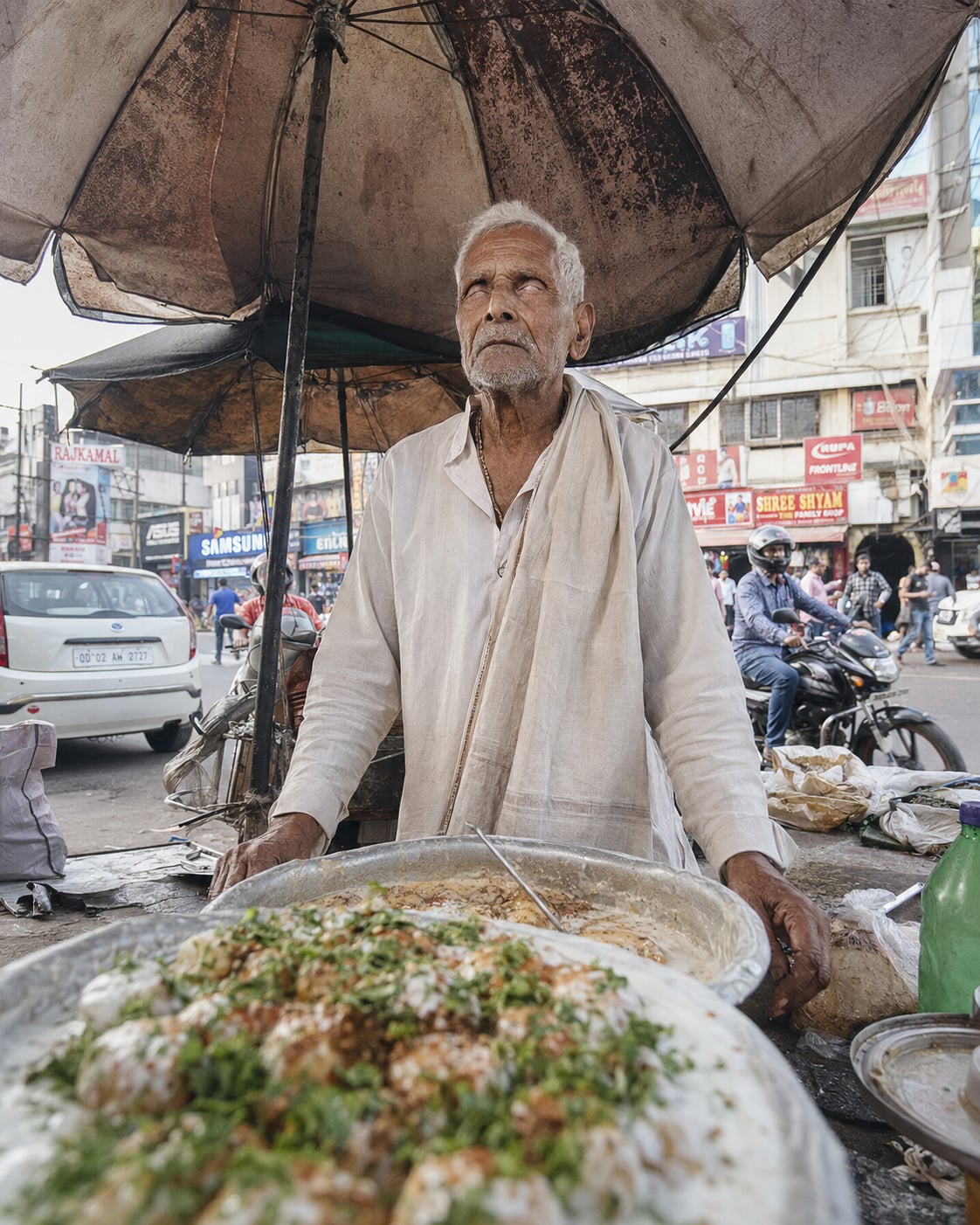
Sighing nostalgically, I said, “Bhogi Bhai, I have come to Cuttack after fifty years. I still remember the taste of Dahibara that you served in green Sal leaves when I studied in this school more than fifty years ago. You are now modernised and serving on ‘use and throw’ recycled papers.”
Yesterday afternoon, when I walked through Buxibazar, I was nostalgically looking for the aroma of bara, goolgoola, and pniyajee. Those snacks were being fried. However, I missed that familiar fragrance floating in the air, which used to pull me to the nearest shop. The whole town seemed alive with that aroma when the sun set. That seemed to me to be missing.
Smiling faintly, Bhogi Bhai said, “I am delighted that my Dahibara has brought you here after fifty years. I cannot see you, but that does not matter because my soul has recognised you, and whatever you have here will be with my compliments. Haan Babu, you are right. The sun has also set in that flavour, although the recipe and the ingredients are the same. The science is the same, but the chemistry has changed.”
The science is the same, but the chemistry has changed.
“The chemistry of everything — the lentil grown using fertilisers and pesticides, the oil, the fire and even the soul of the frying — have changed. The reason is that we have shifted from small batches to larger scale, which has necessitated a huge difference in our dealing with the ingredients.”
“The lentils were then stone-ground in chakki — slightly coarse, slightly uneven. When fried, they released a raw-earth aroma. Today, the batter is machine-ground, smooth, and efficient, but lacks that rustic touch.”
“The oil too was extracted from mustard seeds in a wooden Ghani. The wooden mortar and pestle did not heat up like the modern pulveriser and could carry the pungent and sharp aroma that clung to your nostrils even before you tasted. Now everyone uses refined, colourless oils to please the ‘health-conscious.’ So — fragrance gone, character gone.”
“Even the fire is different. We used firewood in chullis, which gas stoves have replaced. That fire used to lick the thick iron kadais uniformly. Further, smoke also contributed to the typical aroma on the streets that attracted you.”
“No exhaust fans were sucking away the vapour, no cars puffing smoke, no plastic packets trapping the food. Snacks lived in the open air, like festivals lived on the street. The same bara may look cleaner and more hygienic today, but its joy is locked inside glass counters.”
I could not agree more with Bhogi Bhai, because Cuttack itself has changed. A city’s food is not only about taste but also about air, oil, smoke, laughter, and even the street’s dust. Without all that, how can the aroma of yesterday come back?
The discussion
A conversation about this memoir
Two readers talk this memoir over — a conversation about it, in Odia. Not the memoir itself.