PortraitsCuttack — 1 January 1969
Dhyan Chand in Cuttack
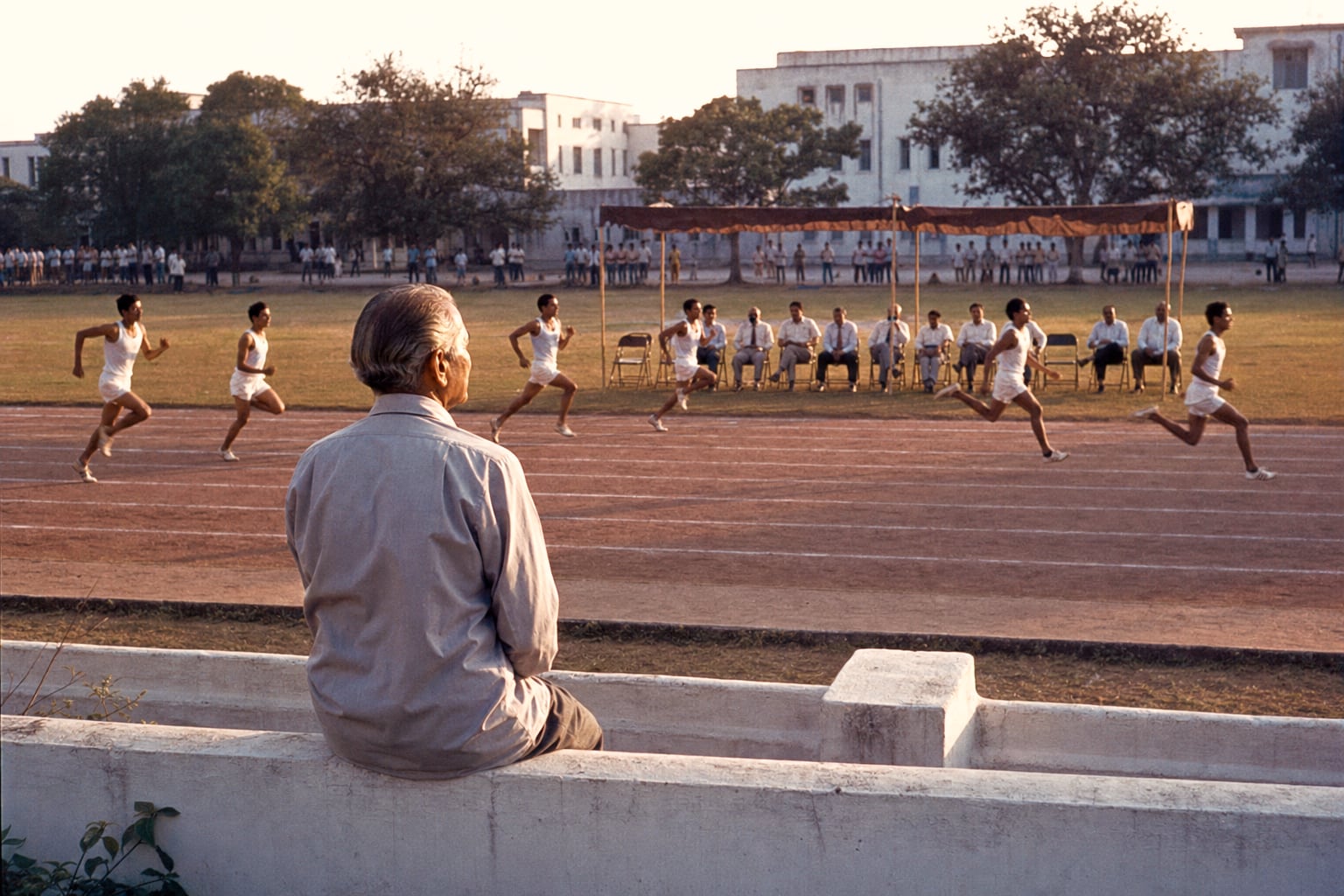
In January 1969, early in a coaching assignment that had brought him to Cuttack, Major Dhyan Chand — the Wizard of Hockey — sat all but unrecognised on a college wall, watching the sports day, until an old student of the college knew his face and had the legend brought to the dais.
The reading couldn’t load. Download it instead.
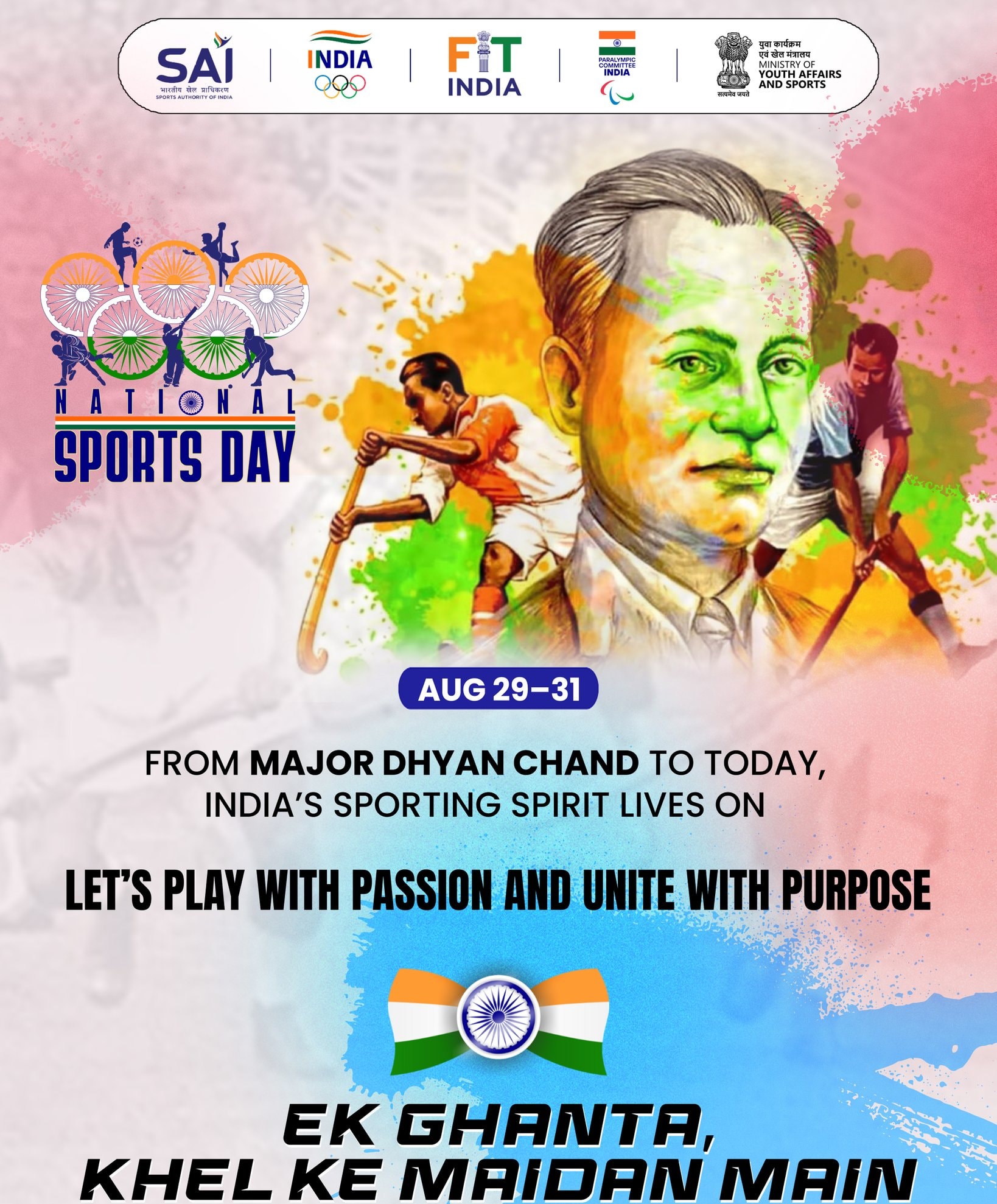
Ek ghanta, khel ke maidan mein — an hour a day, out on the playing field.
In 2012, the Government of India designated 29 August, the birth anniversary of the hockey legend Major Dhyan Chand, as National Sports Day. In 2025, marking his 120th birth anniversary, the observance was expanded into a three-day nationwide movement, and a Hindi slogan was launched, encouraging people of all ages to devote at least one hour each day to outdoor games and other physical activities.
I had the privilege of spending a few hours with the doyen of Indian hockey in the autumn of his life. I, therefore, cannot help but ask, with the utmost respect: Is celebrating the birthday as National Sports Day enough? Is it feasible to spend one hour on outdoor games every day? Can a three-day nationwide campaign adequately compensate for the honour that was overlooked during much of his life after he retired from active hockey?
When I met him in Cuttack in 1969 for a few hours, from that short interaction I could understand that, in his life, Dhyan Chand was never made to feel like a celebrity. When he retired, people did not know who he was, because television did not exist and there was no opportunity to appear as brand ambassador for companies.
Therefore, most of the participants in the current celebrations of his birthday may not even know who Dhyan Chand was! That is the sad and painful truth of Dhyan Chand, whose hockey stick was India’s magic wand for almost two and a half decades. He scored goals with such effortless grace that the world christened him the ‘Wizard of Hockey’.
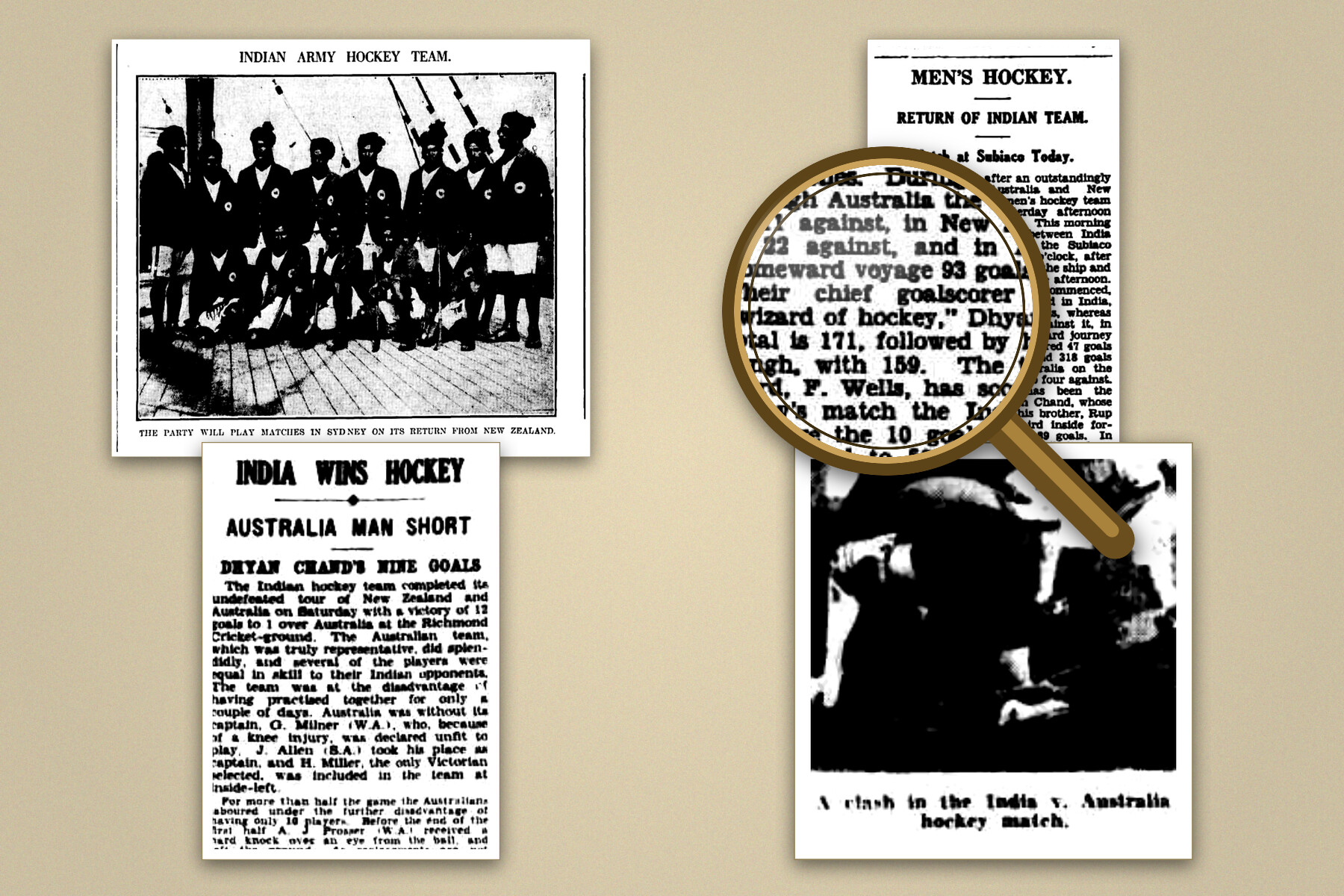
In the early 1950s, while I was a school student, Calcutta was one of the great theatres of Indian hockey. I used to watch hockey matches in the Maidan rather than football because they attracted smaller crowds. I had closely observed players like Lesley Claudius and Keshav Dutt, always alert, skilled, and rivalrous. Dhyan Chand, though not in his prime, was no stranger to these fields. I saw him handing over the Beighton Cup twice as the Guest of Honour.
Later, we shifted to Cuttack. One day in 1969, as I passed by my alma mater, Stewart Science College, I saw Dhyan Chand. I was surprised to see the symbol of India’s golden era of hockey and an enduring figure of sportsmanship sitting on the wall. He was enjoying watching the sports day proceedings at the College. To see a man of his stature sitting on a wall was something I had never imagined.
I felt sorry and thought it wasn’t where the legend should be sitting. I met him and enquired if he would like to join the prize-giving ceremony.
He asked me, “Do you know me?”
“Sir, I have seen you handing over the Beighton Cup. How can anyone forget you?”
“I am glad that you remember me. Most people do not.”
I enquired, “Sir, would you like to sit with the Principal on the dais?”
“Gladly I would, if invited. But how can you suggest that to me?”
“Sir, I studied my two-year Intermediate Course at this college ten years ago. I know the Principal. He was our Physics professor. I can request him.”
I met the Principal and said, “Sir, on this day the legendary hockey player, Dhyan Chand, is sitting on our wall. Would you please invite him to give away the prizes?”
“Is Dhyan Chand in Cuttack? I have read in some of his biographies published in newspapers that he is suffering from depression and is an alcoholic. He must have been drunk to sit on the wall. Besides, it would be awkward to invite the legendary person at the last minute,” the Principal said.
“Sir, I have talked to him, and I have the impression that he is fully in control of his senses despite sitting on the wall. I have enquired if, given an invitation, he would like to hand over the prizes, and he said he is prepared to come.”
The Principal agreed and sent a young lecturer with me to invite Dhyan Chand. We listened to a brief extempore speech from the legend, and the young athletes were inspired to receive their honours from his hands.
In his short speech, Dhyan Chand told the students how hockey draws on a far more continuous and coordinated use of the whole body than other games, and so builds health. He said:
Football relies predominantly on the legs, and cricket on the hands and arms. Stamina and endurance, of body and of mind, are what hockey asks of you. So even if you do not aspire to be a hockey player, play hockey now — you will be the better footballer or cricketer for it.
Dhyan Chand thanked me and invited me to have tea with him at the Barabati Stadium guest house the next morning.
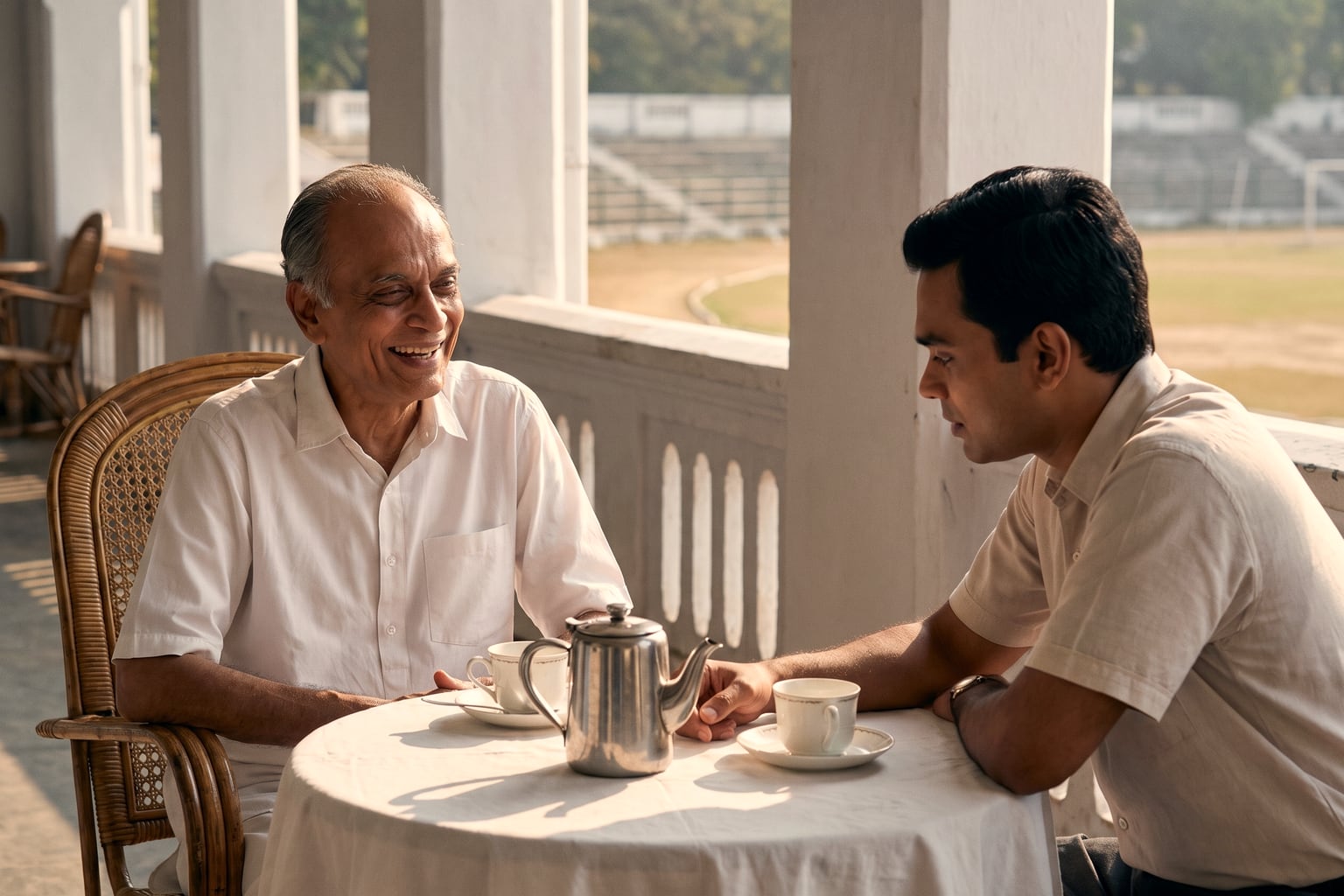
When I met him, he once again thanked me and said, “I have come to this town with an assignment to coach hockey to school and college students. I was requested to be here for one year. Considering the disillusionment of young men in hockey everywhere, I was reluctant. I agreed to try for two months. I am now glad to see a lot of interest and have agreed to continue for at least six months. I can tell you, if this enthusiasm is sustained, hockey will be popular here.”
Dhyan Chand’s prediction has since been confirmed.
Extending my apologies, I said, “Sir, this must have been your first visit to Cuttack. Therefore, you seem to be a stranger in this town.”
“I prefer to remain a stranger in new places. I can move freely. But it pains me that, in North India, where some interest in hockey still exists, I am treated as a stranger. It pains me because while I am keen to pass on my hockey skills, people do not show interest. They do not wish to carry forward our rich hockey legacy.”
Then he laughed and said, “I often think, perhaps I do not look like Dhyan Chand. I am glad that you know who I am.”
“You will be surprised to know that at one of the international hockey engagements in India, when I went to the stadium, I was asked to buy a ticket. I stood in the queue and bought a ticket for three trainees who were with me. Those trainees were embarrassed. Like you, they requested that I be invited, but I was not. A few in the gallery appeared to know who I was. They shook hands with me,” Dhyan Chand said.
“I do not mind if people do not recognise me. That is quite understandable, because most people in the current generation have not seen me play. But I am sad to witness the steady decline in interest in hockey among the younger generation in India. At the same time, other hockey-playing nations are advancing rapidly. The government’s support for hockey is lacking.”
After that, Dhyan Chand said, there was a visible disharmony in the hockey arena among the authorities, coaches, and players. “Like football, hockey is a team game, but we are now playing it not as a team but with eleven players playing individually.”
“The disharmony became evident when, in the final of the 1960 Rome Olympics, India lost to Pakistan. That ended our extraordinary run of six straight Olympic gold medals and 30 consecutive Olympic match wins. The number 30 had started with my stick. It was very painful for me to be a silent spectator to the end of the magic number 30. Thereafter, last year at the Mexico Olympics, India ranked third,” Dhyan Chand said.
I knew that after retiring from the Army in 1956 as a Major, Dhyan Chand had served again — this time as a mentor at the National Institute of Sports in Patiala. He had given up that assignment because of the same disharmony, among the authorities, the coaches, and the players.
“After Patiala, I took up a few short-term assignments,” he said. “Everywhere I found the same lack of interest in hockey. And part of my honorarium was offset against my pension, so there was hardly any financial incentive to coach.”
Sharing his cause of depression, Dhyan Chand said that his failure to make India once again a leading hockey-playing nation was causing him disillusionment.
“When I am alone, I ask myself: who am I? What is the value of my skills? Why do I exist? Those questions create a void in my mind. I want to escape from those painful questions, and alcohol provides me with temporary relief,” he said.
When I am alone, I ask myself: who am I? What is the value of my skills? Why do I exist?
The incident of the stadium ticket was later recounted by the former India captain and sports journalist Gurbux Singh, in his autobiography My Golden Days. During the 1962 Ahmedabad International Hockey Tournament, Major Dhyan Chand — then Chief Coach of the National Institute of Sports, Patiala — travelled with his trainees to watch the matches. Owing to differences between the Indian Hockey Federation and the NIS, he was not issued a complimentary admission pass. And so the greatest hockey player India has produced stood in the public queue and bought a ticket. The episode remains one of the starkest reminders of how inadequately the hockey wizard was treated in his own lifetime.
At that time, I was 26 years old, and I was astounded that a man older than my father could share his emotions with me so spontaneously. It was painful for me to see the image of the man who once drew ovations from Berlin to Melbourne slipping away almost unnoticed in his own homeland. It was also a painful reminder of how easily greatness can be forgotten. If his life on the field was a celebration of Indian sport, the sunset of his life cast a cruel contrast to the brilliance of his playing days.
Beyond the Padma Bhushan in 1956, the state offered him little recognition. He was left without financial security, because such provisions did not exist for athletes of that era. Loneliness and despair drove him to alcoholism, and few people understood why.
By the late 1970s, illness struck — cancer of the liver. His final days were not spent in comfort or ceremony, but in the anonymity of a general ward at AIIMS, New Delhi, where he breathed his last on 3 December 1979, at the age of 74. The following year, the Government of India released a postage stamp in his memory.
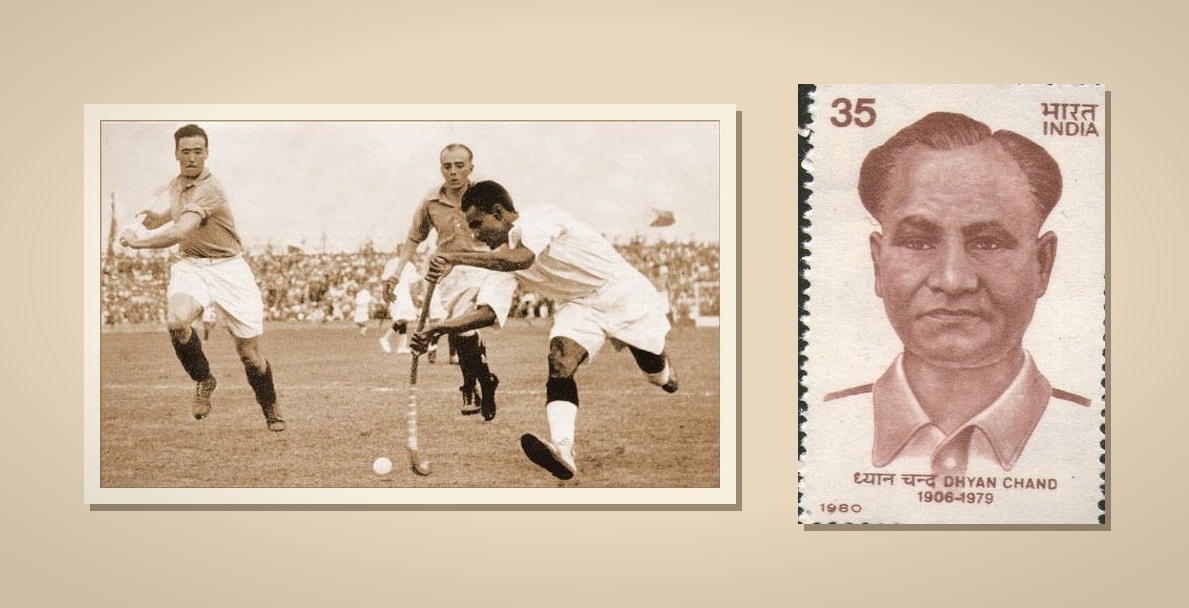
Dhyan Chand had transformed hockey from a sport to the nation’s foremost passion, and stood as its supreme embodiment, elevating India to the pinnacle of world hockey. As the decades passed, Indian hockey gradually lost its pre-eminence on the world stage, even as nations like Pakistan, the Netherlands, Germany and Australia adapted, professionalised, and surged ahead in international competition. Fortunately for him, Dhyan Chand did not live long enough to witness the quiet eclipse of the game he had once elevated to unmatched glory.
It is a sobering reflection that a nation which would one day bestow its highest civilian honour, the Bharat Ratna, upon a cricketer, had allowed the colossus of hockey — Dhyan Chand — to remain confined to the quieter recognition of the Padma Bhushan.
If Dhyan Chand’s life on the field was a festival of Indian sport, his passing was a lament — a saint of hockey abandoned in his final hour. Am I not justified in asking: can a three-day nationwide campaign, with a slogan to spend one hour on outdoor games every day, adequately compensate for the honour that was overlooked during much of his life after he retired from active hockey?
I feel it would be better to institute an international or national trophy in his name — a Major Dhyan Chand Trophy, in the manner of the ICC Champions Trophy, or the regional Border-Gavaskar Trophy, or the national Ranji Trophy in cricket. It could take the form of an international or inter-regional knockout championship, culminating in the presentation of the trophy on Dhyan Chand’s birth anniversary every year.
Ek ghanta, khel ke maidan mein.