The Leaf · Tea or coffee?Kolkata — 1 January 2018
In Search of Fresh Darjeeling Tea
In 2018, a cup of Darjeeling — no milk, no sugar, the whole leaves unfolding in a glass teapot — made a convert of an English coffee-drinker at my son's breakfast table in London. His search for a reliable supply led me to my friend Tapan, once of the Tea Board of India in London, who burst into laughter: the last person to ask him that question was His Highness Prince Philip, in the garden of Buckingham Palace.
The reading couldn’t load. Download it instead.
In 2018, my son Sumanas lived in central London, within walking distance of his workplace. He was a tenant there at a high cost, to save the hassle of commuting — and also to help us walk to some of the best tourist spots and museums during our short stays in London.
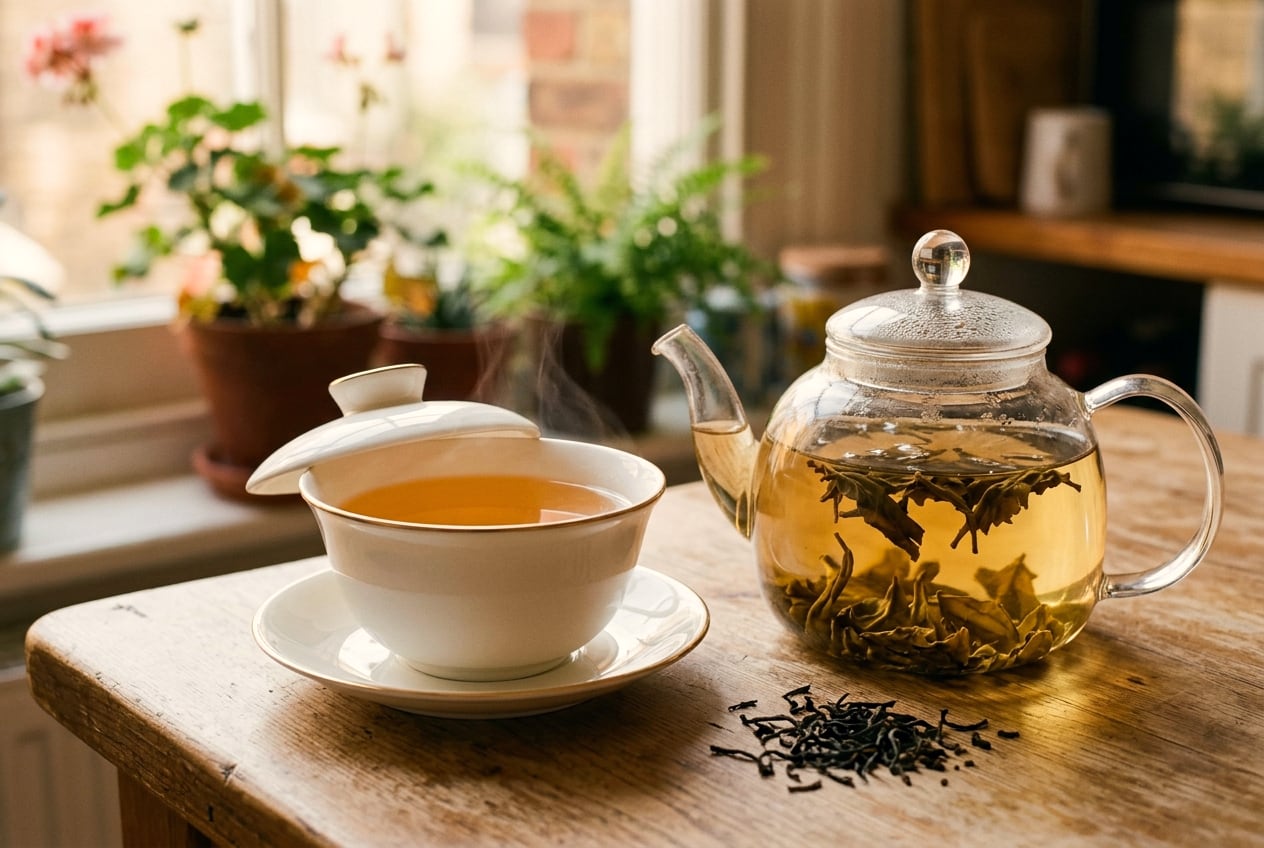
A senior colleague and mentor of Sumanas, David Romano-Critchley — Dave — lived away from the city. Once, Dave spent a night with him after attending a late-night concert. The following morning, at breakfast, Sumanas asked his guest, an Englishman: tea or coffee? Being a coffee drinker, Dave did not have much fascination for tea, but decided to give it a try. Sumanas served his typical cup of Darjeeling tea, without milk or sugar. Dave was amazed by the taste and flavour of the tea. He was fascinated by the looks of the full-size tiny tea leaves that had unfolded inside the transparent glass teapot.
Sumanas explained that Darjeeling tea is served in a typical bone-china, wide-surfaced white cup with a golden rim at the top. This type of cup must have a bone-china lid to retain the flavour — the essential oils that would otherwise be carried away with the water vapour from the surface of the cup. When you sip the tea, you get to inhale the moisture loaded with essential oils evaporating from the surface of the teacup. Thus you get to enjoy the delicate taste, flavour and mouthfeel of Darjeeling tea while sipping the decoction. It was a jaw-dropping experience for the debutant to Darjeeling tea.
The Englishman vouched that — as it tastes so good — he would never again drink tea with milk and sugar. Sumanas explained that Darjeeling tea is best taken without milk, but Assam tea, being rich in polyphenols, tastes much better with milk.
Sumanas informed me that Dave has now become a connoisseur of Darjeeling tea and needs a reliable source of regular supply. Sumanas asked me for help. So I asked my friend Tapan, who had a good spell as Director at the Tea Board of India in London some years back, if he could suggest any reputed retail outlet for quality Darjeeling, Assam and Dooars teas, like Subodh’s or Dhruba’s in Kolkata. They draw the amount of tea one wishes to buy, even a hundred grams, from plywood boxes, and sell to customers standing in a queue. Tapan and I have been friends for nearly seven decades. I thought he would be the best person to guide Sumanas.
The second person to ask
Tapan burst into laughter and said: you are the second person to ask me this question. Can you guess who the first person was? Well, it was no less a person than Prince Philip himself. Our office in London used to be at India House — the diplomatic circle of India. Every year, we received a couple of invitations to the birthday celebrations of Her Majesty, the Queen of England. Once, by turn, I became entitled to this invitation, at the garden of Buckingham Palace.
Tapan continued: the invitation card that I received is memorable. It was the Queen’s birthday, but the invitation was extended by the Lord Chamberlain. He is in charge of all court ceremonies and of the arrangements for all state ceremonies, such as state visits of foreign dignitaries, royal marriages, christenings, and funerals — except that of the sovereign, which is the responsibility of the Earl Marshal. The Lord Chamberlain also organises the royal garden parties, where he is in close personal attendance on the Sovereign. In other words, he is the second dignitary of the Court. The invitation card that I received read: “Lord Chamberlain is commanded by Her Majesty the Queen of England, Elizabeth II, to invite Mrs and Mr ……….”.
Incidentally, the Queen has two birthdays each year, Tapan stated. Her Majesty was born on 21st April. She spends this birthday with the Royal family; the other, on the second Saturday of June, is for public celebrations. This was the June celebration to which we were invited.
It was a moment of pride for my wife and me when the Lord Chamberlain received us and shook my hand, Tapan said. At the party, amongst the tall Britishers clad in long overcoats, there were a few short fellows like me. Therefore, I was not visible most of the time. I was happily enjoying the best of the drinks. Thereafter, Prince Philip, the Duke of Edinburgh, noticed me. He walked up to me, shook my hand, and was curious to know who I was!
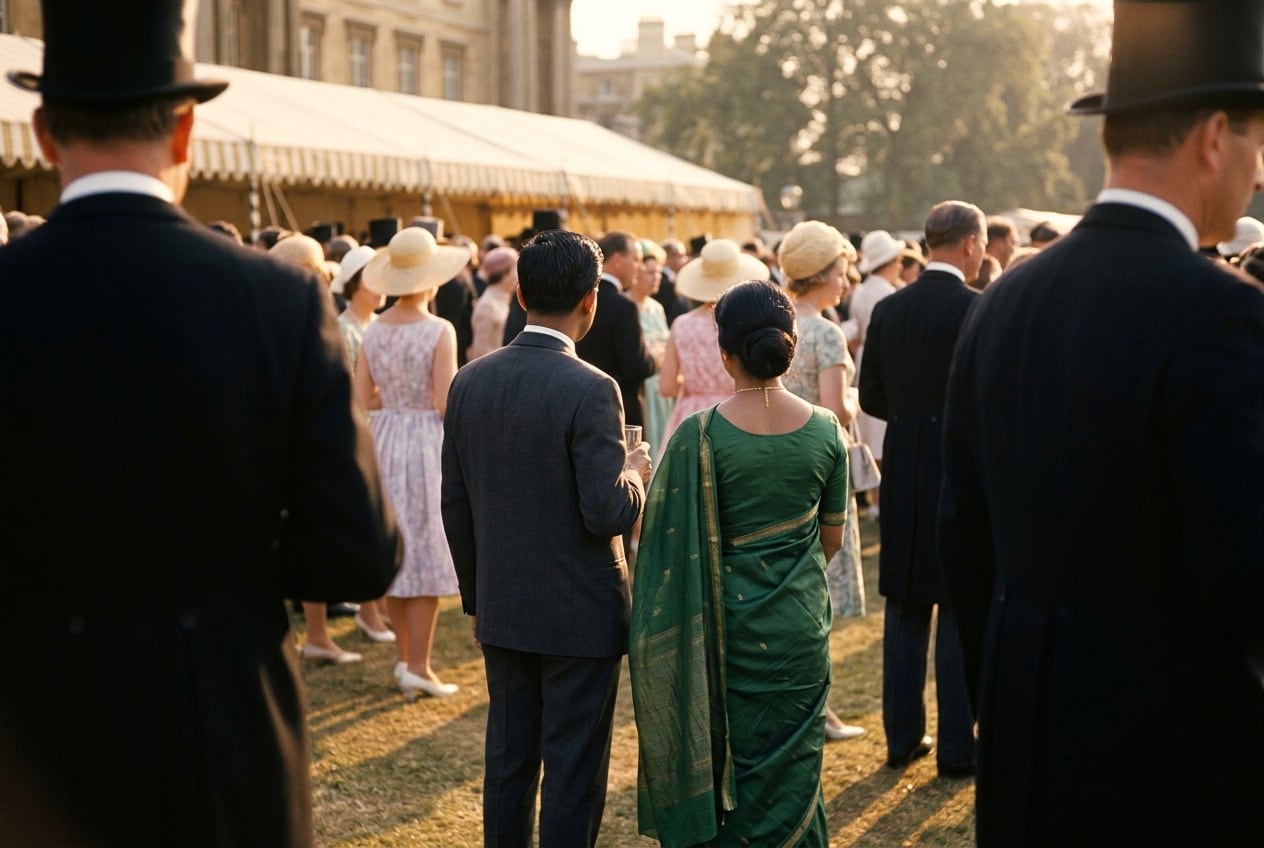
When he learnt that I was representing the Tea Board of India, he wanted to know why the teas made at Darjeeling are marvellous. I explained. Then he said: “My mother used to receive some of the best of teas from Darjeeling. Over the last few years we have not been receiving those teas.”
“Now, where in London can one find garden-fresh Darjeeling teas?” the Prince asked.
I explained to His Royal Highness that it would be the privilege of the Tea Board of India to procure and hand over the best of Darjeeling tea to him. I spoke to our Chairman, and promptly tea caddies were despatched to me for delivery at Buckingham Palace, Tapan stated.
Heads and heads
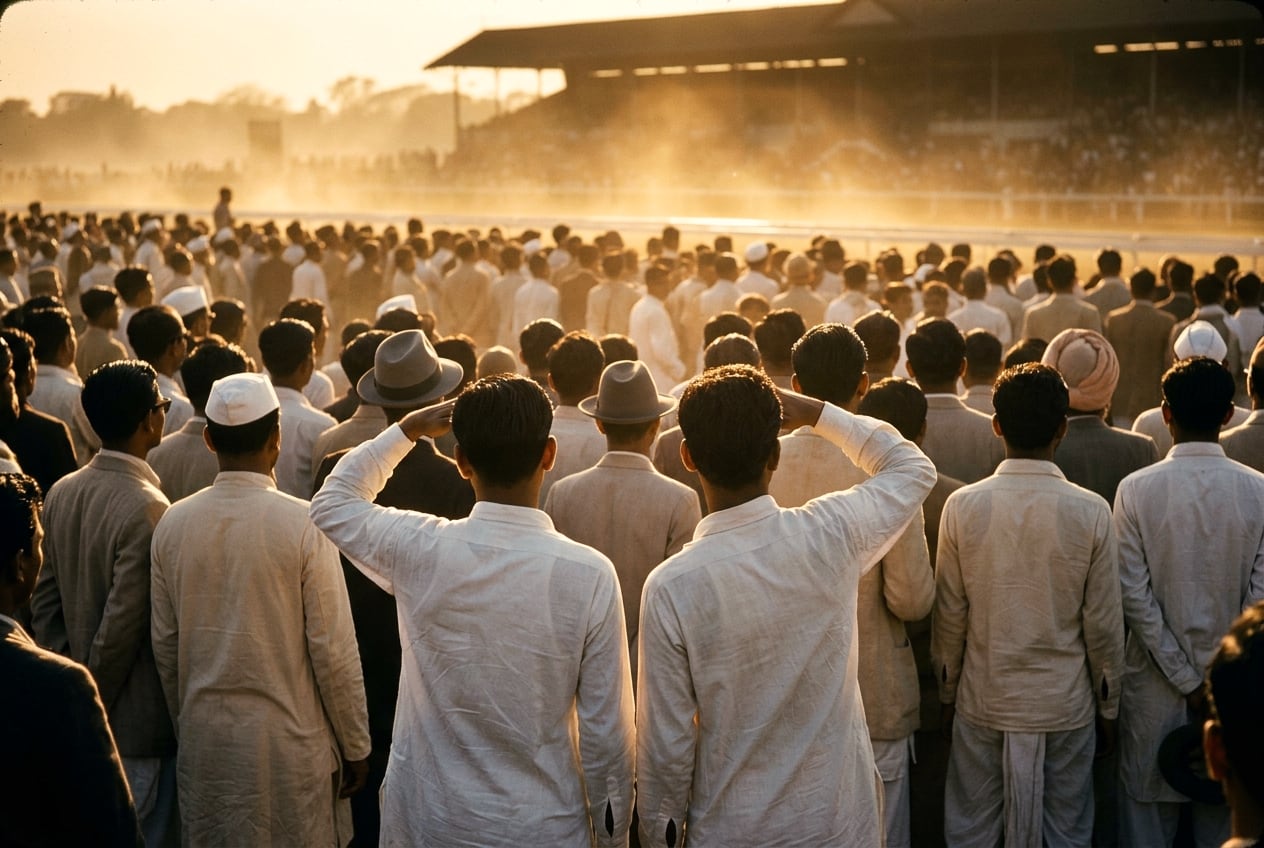
Tapan then reminded me: do you remember, when Queen Elizabeth visited Calcutta in 1961, I wished to see the Queen from a short distance? Her Majesty, then 34, accompanied by her husband, the Prince, was to visit the racecourse, where a horse race for a trophy was organised in her honour, and she was to present the first Queen Elizabeth II Cup. I had managed to get the entry passes to the racecourse for both of us — but we could only see heads and heads. Our mission was unfulfilled.
So, Tapan said, when there came the golden moment of being introduced to and shaking hands with Her Majesty, wearing soft gloves, I took the courage to narrate my unfulfilled mission at Calcutta. Her Majesty was delighted, and stated that she had cherished her visit to the racecourse and to Calcutta.
Tapan, I said, shaking hands with the Queen and the Prince and talking to them is indeed a unique experience for you. But now, tell me: what do I tell my son about resourcing Darjeeling tea in London?
If Darjeeling’s annual tea production is less than six million kilograms, in India’s total production of more than thirteen hundred million kilograms, how can you find Darjeeling tea in various countries? It is indeed frustrating that even good-quality Assam tea is not readily available in England. Besides, whatever is sold as Assam or Darjeeling tea is not worth the price.
Two hundred years ago, Britain devoted more than half a century — and immense human, financial and technological resources — to breaking China’s monopoly over tea, playing a decisive role in shaping the modern tea industry in India and across the world. Is it not profoundly ironic that the nation should today be unable to offer its own people quality tea, even when discerning consumers are willing to pay an appropriate price for it?